
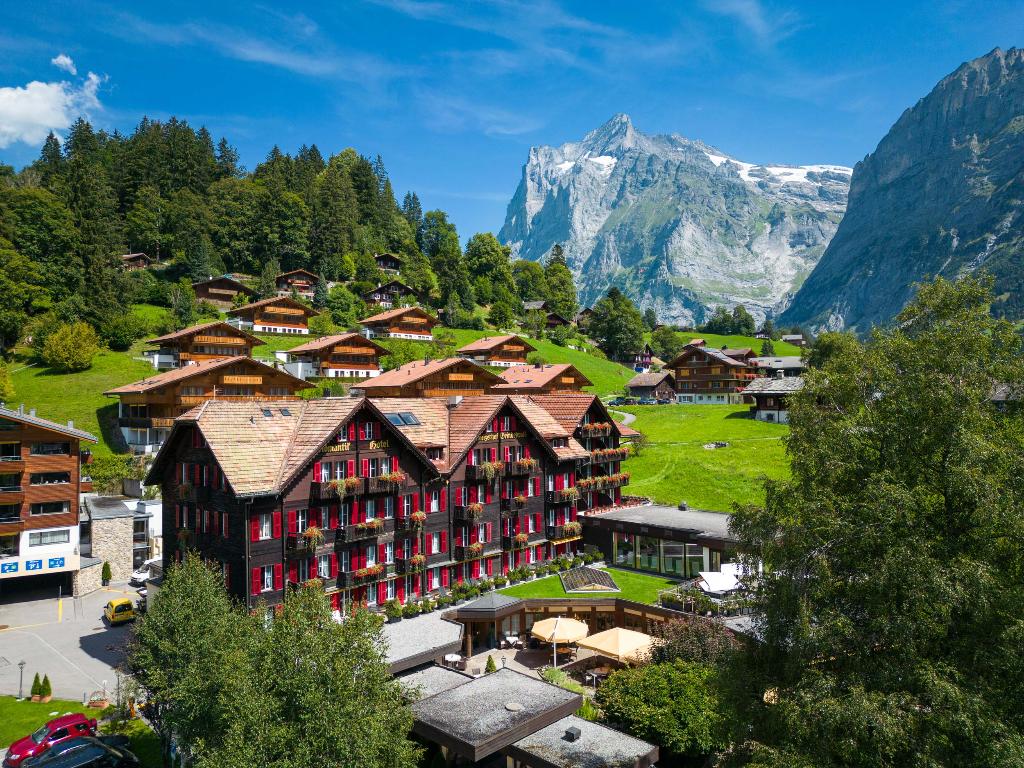
The Swiss Alps do drama on an enormous scale. Cogwheel trains grind up through the Eiger itself, cable cars hang over glacier fields and waterfalls fall from valley walls so high they turn to mist before they land. Then, at the bottom, there's a village of wooden chalets with geraniums on every balcony and a cowbell clanging somewhere in the meadow.
What makes it easy is the transport. Swiss trains, cable cars and postbuses connect almost every valley, so you can hike in the morning, ride a lift to a glacier after lunch and be back for fondue. Base yourself in one region, buy a rail pass if it suits your plans, and treat the weather forecast as a menu: clear days are for summits, cloudy ones for lakes, spas and cheese.
Don't miss
The Jungfrau region
The classic Alpine first trip, around Grindelwald, Wengen and Mürren.
Jungfraujoch
Landmark

Photo: Ank Kumar, CC BY-SA 4.0 The 'Top of Europe' is a saddle between two peaks, reached by a cogwheel railway that tunnels through the heart of the Eiger and Mönch. The station sits above 3,400 metres, with an ice palace, a viewing platform and a view over the Aletsch Glacier.
It's a spectacular day out, and it's best on a clear morning.
Tip: Check the webcams before you go, and take layers and sunglasses: it is cold and bright at altitude.
Grindelwald First
Activity

Photo: Freddy Amend, CC BY-SA 4.0 A gondola from Grindelwald lifts you to the First ridge, where the Cliff Walk, a platform bolted to the rock face, juts out over the valley opposite the Eiger. From the top, a path leads to the lake of Bachalpsee, one of the classic Alpine walks.
The Eiger's famously sheer north face, the Nordwand, looks down on the whole scene.
Lauterbrunnen Valley
Nature

Photo: chensiyuan, CC BY-SA 4.0 A deep, U-shaped valley with sheer cliffs and waterfalls streaming down the walls, including the tall Staubbach Falls above the village. The scenery is said to have inspired Tolkien's Rivendell, and it's certainly easy to believe.
Nearby, the Trümmelbach Falls thunder through a gorge inside the mountain, with a lift and walkways that take you up for a close-up view.
Mürren and the Schilthorn
Landmark
A car-free village on a ledge high above the valley, and the gateway to the Schilthorn, where a revolving restaurant sits on the summit. It appeared in a James Bond film, and the view takes in the Eiger, Mönch and Jungfrau.
Big peaks and glaciers
The Matterhorn
Nature

Photo: Ximonic (Simo Räsänen), CC BY-SA 4.0 The most famous mountain in the Alps rises like a pyramid above the car-free village of Zermatt. A cogwheel railway climbs to Gornergrat for the best views, and cable cars reach the Klein Matterhorn for a panorama of glaciers and peaks.
Tip: Look for the peak early in the morning, before the cloud builds.
Aletsch Glacier
Nature

Photo: Tobias Alt, Tobi 87, CC BY-SA 4.0 The longest glacier in the Alps flows in a great white river between the Bernese peaks, part of a UNESCO World Heritage area. Viewpoints such as the Eggishorn and Bettmerhorn look straight over it.
Like every glacier in the Alps, it's shrinking, which makes seeing it feel more important.
Mount Titlis
Activity

Photo: Anuj Agarwal, CC BY-SA 4.0 From Engelberg, a series of cable cars, including a rotating gondola, lifts you to a glacier at over 3,000 metres. There's a glacier cave to walk through and a high suspension bridge, the Cliff Walk, to cross.
The Glacier Express
Activity

Photo: Kabelleger / David Gubler, CC BY-SA 4.0 A slow, scenic rail journey between Zermatt and St Moritz, crossing high bridges and passing through tunnels and mountain pastures. The curving Landwasser Viaduct is the high point.
It takes most of a day, so settle in with a window seat and a picnic.
Lakes and old towns
Lake Thun
Nature

Photo: JoachimKohler-HB, CC BY-SA 4.0 A long, emerald-green lake with fairytale castles, vineyards and steamers that cross between Thun, Spiez and Interlaken. It's a gentle contrast to the high peaks, and the Eiger, Mönch and Jungfrau often appear on the skyline.
Oeschinensee
Nature

Photo: Martin Thurnherr, CC BY-SA 4.0 A turquoise lake ringed by cliffs and waterfalls above Kandersteg, reached by a gondola and a short, easy walk. It's a gorgeous place to swim, picnic or walk round the shore.
Lucerne
Day trip

Photo: NOTE: This image is a panorama consisting of multiple frames that were merged or, CC BY-SA 4.0 A pretty lakeside city with a medieval old town and the covered wooden Chapel Bridge, with its painted panels and stone water tower. Steamers cross the lake, and Mount Pilatus and the Rigi are within easy reach.
Spas and ski villages
Leukerbad
Activity

Photo: Whgler, CC BY 4.0 The Alps' great thermal resort has outdoor pools of steaming water set beneath the sheer cliffs of the Gemmi Pass. Soaking in warm thermal water while snow falls, or in summer with mountain views, is one of the region's great pleasures.
Saas-Fee
Neighbourhood
A car-free village in a bowl of 4,000-metre peaks and glaciers, with an underground funicular up to the ice. It has an old-fashioned Alpine charm, and good snow when others are bare.
Gstaad
Neighbourhood
Chalet-chic glamour with a village heart: a car-free main street, designer boutiques and a summer music festival. The Glacier 3000 cable car nearby takes you up to a high-altitude suspension bridge between two peaks.
Eat and drink
Cheese fondue
Food

Photo: Brücke-Osteuropa, CC0 Melted Gruyère and Vacherin in a pot over a flame, with cubes of bread to dip. Eat it after a day in the mountains, and drink tea or white wine with it, not cold water.
Raclette
Food
A half-wheel of cheese melted at the fire and scraped onto potatoes, with gherkins and little onions on the side. It's the speciality of the Valais, and a perfect warmer.
Rösti
Food
A crisp, golden cake of grated potato, fried in butter and served with sausage, egg or cheese. Simple mountain food, good for hungry hikers.
Where to stay in Swiss Alps
Not sure which area suits you? Read our guide: Where to stay in the Swiss Alps →
★★★★
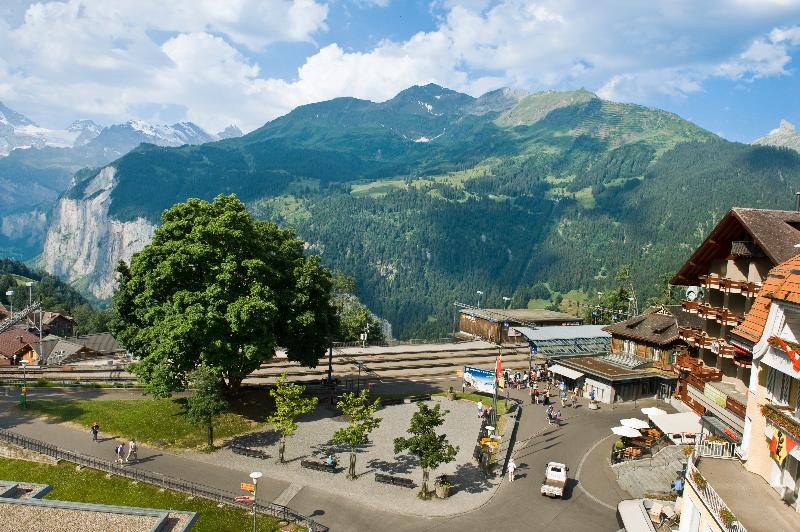
Hotel Silberhorn
Wengen
All-inclusive option · Spa · 62 rooms
See prices and rooms →
★★★★
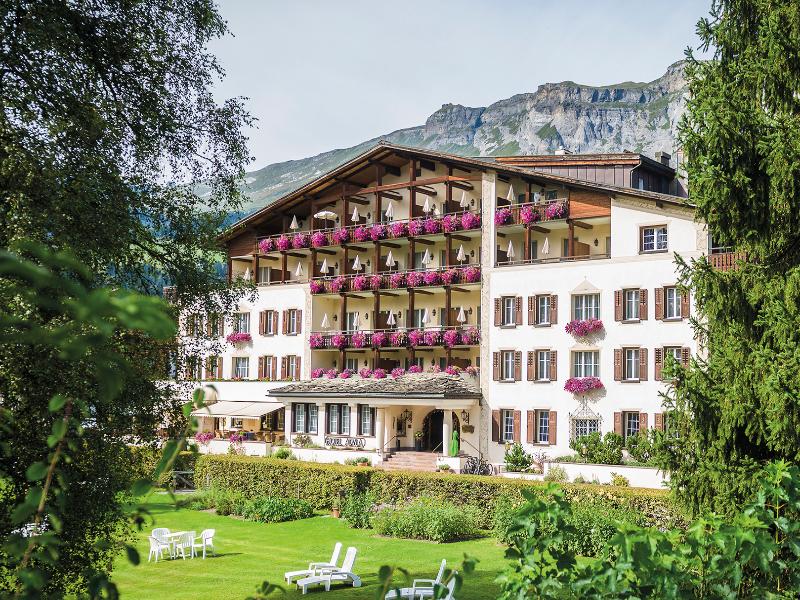
Adula
Flims
Beach 700 m · Spa · Pool
See prices and rooms →

★★★★★
Romantik Schweizerhof Grindelwald
Grindelwald
All-inclusive option · Spa · Pool
See prices and rooms →
★★★★
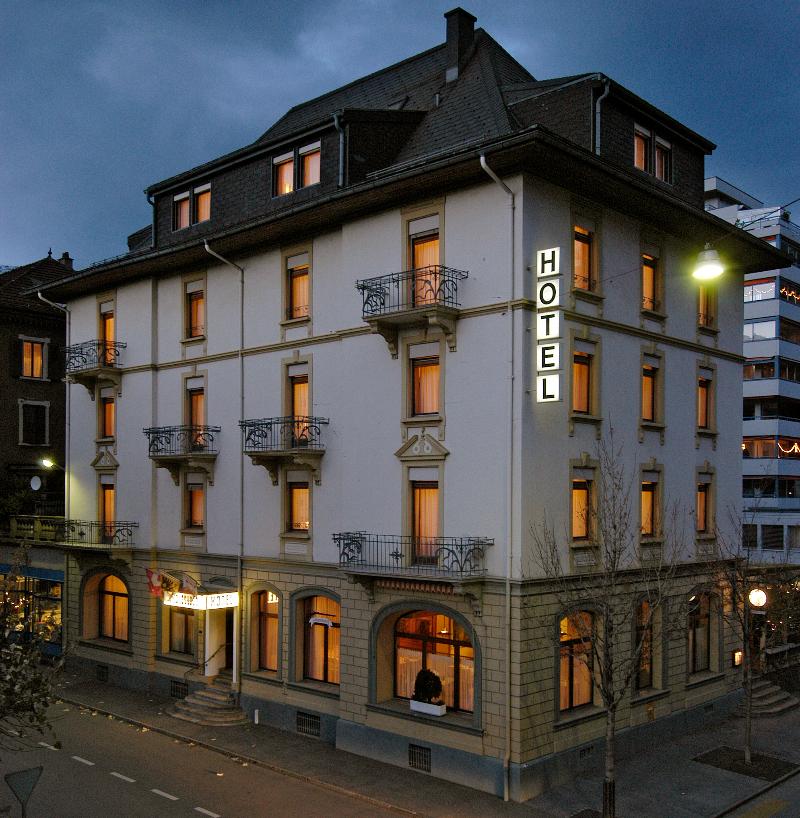
Ambassador
Brig
27 rooms · Parking
See prices and rooms →

★★★★
Arc-en-ciel
Gstaad
Spa · Pool · 39 rooms
See prices and rooms →
★★★★★
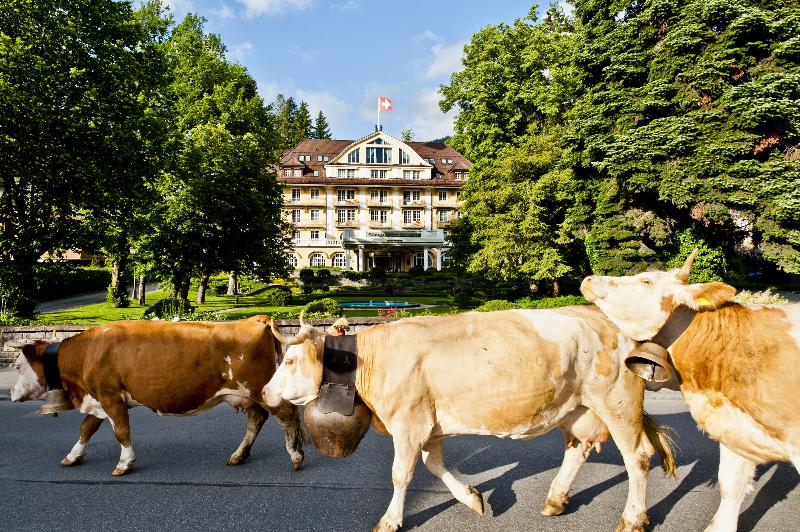
Le Grand Bellevue
Gstaad
Spa · Pool · 57 rooms
See prices and rooms →
★★★★
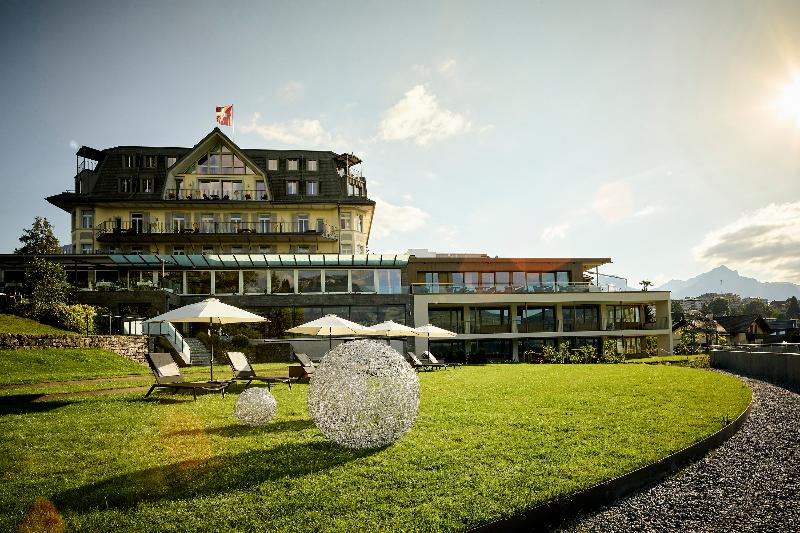
Belvedere Strandhotel
Spiez
Beach 300 m · Spa · Pool
See prices and rooms →
★★★★★
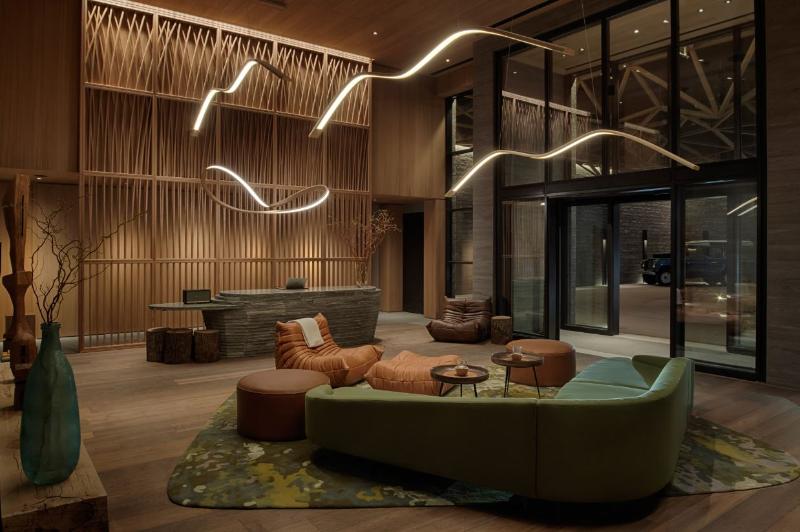
Six Senses Crans-montana
Crans-Montana
77 rooms · Parking
See prices and rooms →
Getting around
Swiss trains, postbuses and cable cars are punctual and well connected, and many resorts are car-free, so you leave your car at the station. A Swiss rail pass can pay off if you plan several mountain trips. Book popular lifts like Jungfraujoch and the Glacier Express in advance for summer.
When to go
Summer, from June to September, is best for hiking, lakes and lifts, while winter, from December to March, is for skiing. Spring and late autumn are quieter, with many lifts closed between seasons. Mountain weather changes fast, so be flexible.
Questions about visiting Swiss Alps
- What is the Swiss Alps best known for?
- Dramatic peaks such as the Eiger, Jungfrau and Matterhorn, scenic railways, skiing, Alpine villages and lakes, and cheese and chocolate.
- How many days do you need in the Swiss Alps?
- Four or five days in one region, such as the Jungfrau area, lets you do a summit, a valley walk and a lake. A week allows two bases.
- Do you need a car in the Swiss Alps?
- No. Trains, buses and cable cars reach most resorts, and several, such as Zermatt, Wengen and Saas-Fee, are car-free.
- When is the best time to visit the Swiss Alps?
- June to September for hiking and lakes, and December to March for skiing. Pick based on what you want to do.
More guides
- Where to stay in the Swiss Alps
- The best things to do in London
- The best things to do in Edinburgh
- The best things to do in Amsterdam
- The best things to do in Barcelona
- The best things to do in Budapest
- The best things to do in Dublin
- The best things to do in Krakow
- The best things to do in Prague
- The best things to do in Berlin
- The best things to do in Lisbon
- The best things to do in Milan
- The best things to do in Paris
- The best things to do in Rome