
Switzerland looks exactly as you hope it will. The mountains really are that sharp, the lakes really are that blue, and the cows really do wear bells. In a country smaller than Scotland you get four languages, dozens of peaks over four thousand metres, medieval cities with painted fountains, and a railway network that treats a glacier as just another stop on the line.
It is also remarkably easy. Trains, boats and cable cars connect with clockwork precision, so you can breakfast beside a lake, lunch on a mountain terrace and be back in a city for dinner. The only hard part is choosing where to point yourself, so start here.
Don't miss
The mountains
The reason most people come. You do not need to be a climber; the Swiss have built a railway or a cable car up almost everything.
The Matterhorn
Nature

Photo: Ximonic (Simo Räsänen), CC BY-SA 4.0 The most recognisable mountain in the Alps is a crooked pyramid of rock that rises alone above the village of Zermatt. Cars are banned from the village, so you arrive by train and get around on foot or by electric taxi, with that peak peering down every street. For the classic view, ride the Gornergrat cog railway up to a ridge ringed by glaciers and snowy summits. Walkers can come down on foot past small lakes that hold the Matterhorn's reflection on still mornings.
Tip: The summit is often clearest first thing. Go up early and save the village for the afternoon.
Jungfraujoch
Landmark

Photo: NOTE: This image is a panorama of Jungfraujoch Sphinx-Observatory consisting of , CC BY-SA 4.0 A cog railway tunnels up through the Eiger to the highest railway station in Europe, on a saddle of snow and ice between the Mönch and the Jungfrau. Step out and you are looking down the Aletsch Glacier, the longest in the Alps, with the green valleys of the Bernese Oberland far below. It is a big day out from Interlaken, Grindelwald or Wengen, and the air is thin at the top, so take it slowly.
Tip: Check the summit webcams before you set off. In cloud you will see nothing but white.
Lauterbrunnen Valley
Nature
A deep, flat-floored valley walled in by sheer cliffs, with waterfalls pouring off the top on both sides. The Staubbach Falls drop almost straight onto the village. It is one of the loveliest corners of the Alps and an easy place to enjoy: stroll the valley floor, or take the cable car and train up to car-free Mürren or Wengen for the balcony view.
Mount Pilatus
Nature

Photo: Ermell, CC BY-SA 4.0 Lucerne's home mountain is a jagged ridge with a view over the lake and a long line of snowy peaks. Getting there is the fun part: up from the lakeside on the steepest cogwheel railway in the world, down the other side by cable car and gondola. Combine it with a boat across the lake for a classic round trip.
Lakes and cities
Chapel Bridge, Lucerne
Landmark

Photo: NOTE: This image is a panorama consisting of multiple frames that were merged or, CC BY-SA 4.0 Lucerne is the Swiss city of everyone's imagination, set on a lake with mountains behind, and the Chapel Bridge is its emblem: a covered wooden footbridge from the fourteenth century that angles across the river beside a stout stone water tower. Painted panels under the roof tell the city's story. Wander on through the Old Town's frescoed squares, then take a paddle steamer out onto Lake Lucerne. It suits everyone, particularly first-timers.
Zurich Old Town
Neighbourhood

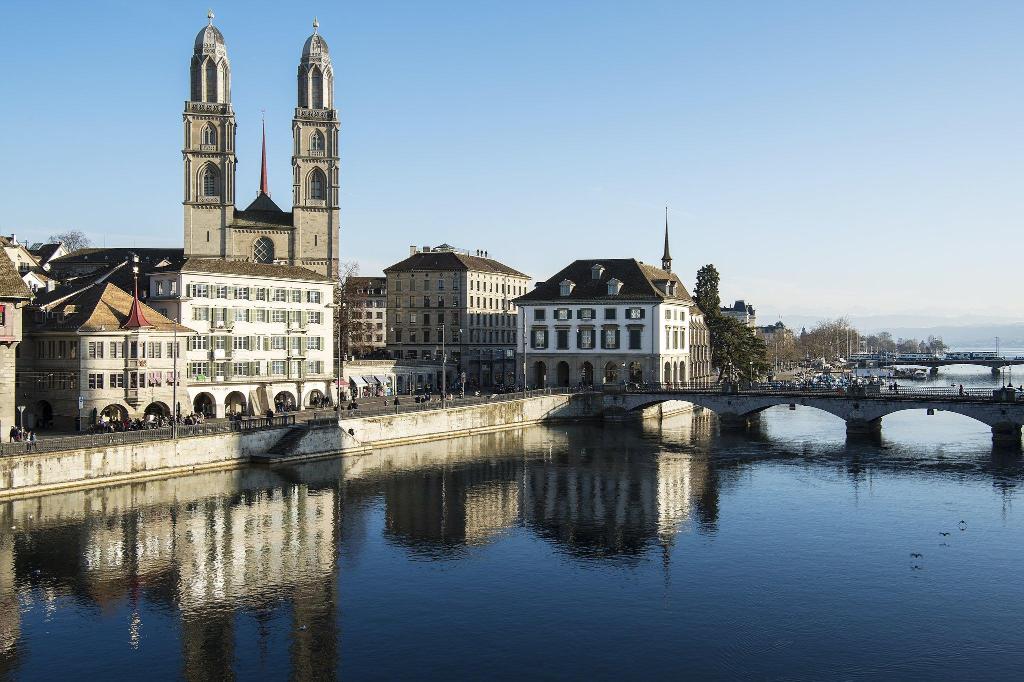
Photo: Barbara Steinemann, CC BY-SA 4.0 Switzerland's largest city has a reputation for banks, but its heart is a medieval old town of guild houses and steep lanes on both banks of the River Limmat. Look for the twin towers of the Grossmünster and the Chagall windows in the Fraumünster, then follow the river to the lake for a swim or a boat trip. On summer evenings the whole city seems to be in the water.
Bern Old Town
Neighbourhood

Photo: JoachimKohler-HB, CC BY-SA 4.0 The Swiss capital is a surprise: small, unhurried and wrapped in a loop of the turquoise River Aare. Its UNESCO-listed old town is built of grey-green sandstone, with miles of covered arcades, flower-decked fountains and the Zytglogge, a medieval clock tower whose figures perform on the hour. In summer, locals float down the river past the parliament building.
Chillon Castle and Lake Geneva
Landmark

Photo: Christian David, CC BY-SA 4.0 Chillon is a storybook medieval fortress on a rock at the eastern end of Lake Geneva, near Montreux, with the Alps rising across the water. Byron wrote a poem about its dungeon and carved his name on a pillar. Reach it on foot along the flower-lined lakeside promenade from Montreux, or by boat. Behind you, the terraced vineyards of Lavaux tumble down to the shore, a UNESCO site and a beautiful place for a walk and a glass of white wine.
Jet d'Eau, Geneva
Landmark

Photo: Photograph by Mike Peel (www.mikepeel.net)., CC BY-SA 4.0 Geneva's landmark is a single plume of water fired high above the lake, visible from all over the city and from aircraft on the way in. Walk out along the jetty to feel the spray, then explore the hilltop Old Town and the lakeside parks. On a clear day you can see Mont Blanc from the waterfront.
Great train journeys
In Switzerland the journey is often the sight.
The Glacier Express
Activity

Photo: Kabelleger / David Gubler, CC BY-SA 4.0 Billed as the slowest express train in the world, this panoramic service takes most of a day to cross the Alps between Zermatt and St Moritz. It climbs over the Oberalp Pass, threads the Rhine Gorge and curves across the Landwasser Viaduct, a stone arch that leaps straight into a tunnel in the cliff. Big windows, lunch at your seat and nothing to do but stare.
Tip: Seats must be reserved in advance and summer trains sell out. You can also ride the same line on ordinary regional trains.
The Bernina Express
Activity

Photo: Kabelleger / David Gubler (http://www.bahnbilder.ch), CC BY-SA 3.0 The red trains of the Bernina line climb from the Engadine past glaciers and milky blue lakes, cross the Bernina Pass in the open air, then spiral down through chestnut woods to Tirano in Italy. The railway is a UNESCO World Heritage Site, and many travellers rate it the more dramatic of the two famous routes.
Wild water and high valleys
The Rhine Falls
Nature

Photo: Jörg Braukmann, CC BY-SA 4.0 Near Schaffhausen in the north, the Rhine drops over a wide ledge of rock in a roar of white water. This is one of the largest and most powerful waterfalls in Europe, and you can get thrillingly close: viewing platforms hang over the torrent, and small boats land on a rock in the middle. An easy half-day trip from Zurich, and a hit with children.
St Moritz and the Engadine
Nature

Photo: Murdockcrc, CC BY 3.0 St Moritz likes to say it invented the winter holiday, and it still does glamour better than anywhere in the Alps. But the real star is the Engadine valley around it: a string of lakes, larch forests that turn gold in autumn, and villages of thick-walled houses decorated with scratched plaster patterns. Come for skiing in winter, walking and sailing in summer.
Eat and drink
Fondue and raclette
Food
Swiss mountain food is built around melted cheese, and it tastes best after a day outdoors. Fondue is a shared pot of bubbling cheese and white wine into which you dip cubes of bread. Raclette is cheese melted and scraped over boiled potatoes, with gherkins and small onions on the side. Both are sociable, filling and best followed by a walk.
Swiss chocolate
Food
The Swiss pioneered milk chocolate and the smooth, melting texture the world now takes for granted, and they still eat more of it than almost anyone. Every town has a chocolatier with a window of truffles and pralines, and several of the big names run visitor centres with tastings. Leave an empty corner in your suitcase.
Where to stay in Switzerland
Not sure which area suits you? Read our guide: Where to stay in Switzerland →

★★★★
Admiral Lugano
Lugano Paradiso
Pool · Parking
See prices and rooms →

★★★★
Ambassador
Berne
Spa · Pool · Pets allowed
See prices and rooms →

★★★★★
Storchen Zurich - Lifestyle Boutique Hotel
Zurich
67 rooms · Family-friendly · Parking
From £706 a night, taxes incl.2 adults · checked 14 Nov, 09:22

★★★★
Ambassador Zermatt
Zermatt
Pool
From £385 a night, taxes incl.2 adults · checked 14 Nov, 14:22

★★★★
Ameron Luzern Hotel Flora
Lucerne
Parking
From £190 a night, taxes incl.2 adults · checked 14 Nov, 15:22

★★★★★
Hotel Schweizerhof Luzern
Lucerne
All-inclusive option · Spa · Family-friendly
From £500 a night, taxes incl.2 adults · checked 14 Nov, 15:22

★★★★
Art Boutique Hotel Monopol
St Moritz
Spa · 73 rooms · Parking
From £470 a night, taxes incl.2 adults · checked 14 Nov, 09:22

★★★★★
Victoria-Jungfrau Grand Hotel and Spa
Interlaken
All-inclusive option · Spa · Pool
From £655 a night, taxes incl.2 adults · checked 14 Nov, 01:52
Getting around
Travel by train. The Swiss network reaches almost every town and valley, and connects neatly with postbuses, lake steamers and mountain railways. Rail passes for visitors cover most of it and are worth a look if you plan to move around. A car is rarely needed, and several mountain villages do not allow them at all.
When to go
Summer and early autumn are best for walking, lake swimming and clear mountain views. Winter is ski season in the Alps, with Christmas markets in the cities. Mountain weather changes quickly in any month, so pack layers and keep your plans flexible.
Questions about visiting Switzerland
- What is Switzerland best known for?
- The Alps, above all the Matterhorn and the Jungfrau region, along with its lakes, scenic railways, chocolate, cheese and watches.
- How many days do you need in Switzerland?
- A week lets you combine a city such as Lucerne or Zurich with the mountains around Interlaken or Zermatt. With ten days you can add Lake Geneva or a scenic train to St Moritz.
- Do you need a car in Switzerland?
- No. Trains, buses, boats and cable cars cover the whole country and run like clockwork. A car is only really useful for remote valleys.
- What is there to do in Switzerland with kids?
- Mountain railways and cable cars, boat trips on the lakes, the Rhine Falls, summer toboggan runs and easy valley walks around Lauterbrunnen and Grindelwald all go down well with children.
More guides
- Where to stay in Switzerland
- The best things to do in London
- The best things to do in Edinburgh
- The best things to do in Manchester
- The best things to do in York
- The best things to do in Amsterdam
- The best things to do in Birmingham
- The best things to do in Liverpool
- The best things to do in Bristol
- The best things to do in Barcelona
- The best things to do in Budapest
- The best things to do in Cambridge
- The best things to do in Dublin
- The best things to do in Krakow