
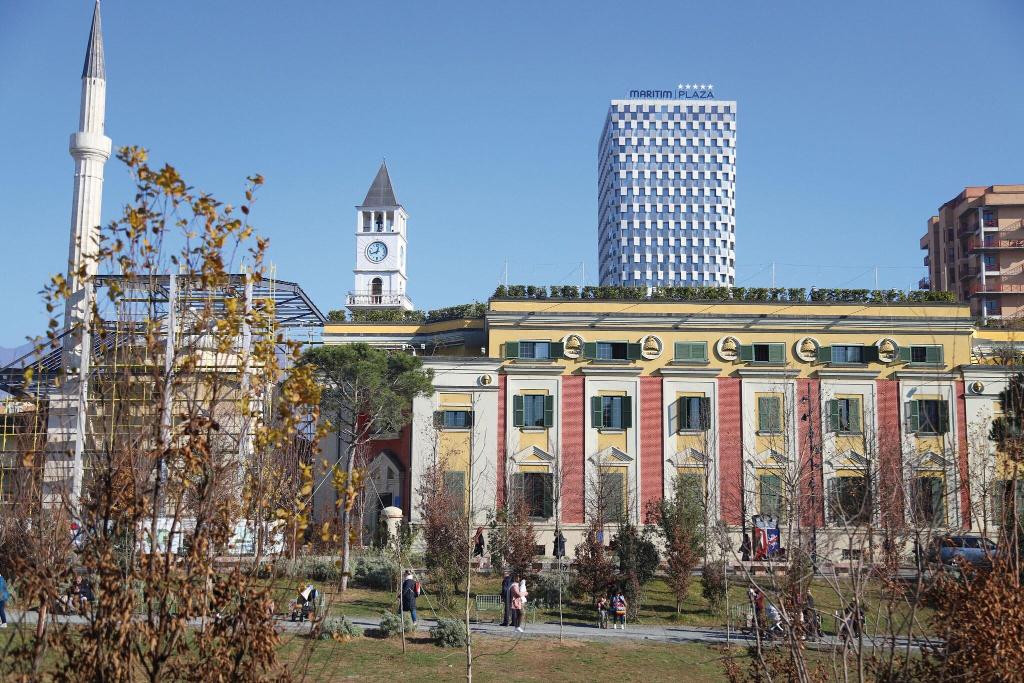
Tirana is not a pretty city in the usual sense, and it could not care less. For nearly half a century Albania was sealed off from the world under one of the harshest communist regimes in Europe. When the doors finally opened, its capital set about making up for lost time: grey apartment blocks were painted in stripes of orange, green and violet, cafés sprang up on every corner and the streets filled with noise.
The result is one of Europe's most surprising city breaks. Come for the strange, compelling relics of the old regime, the bunkers and the pyramid, and stay for the energy of the new one: superb coffee, generous food, a mountain at the end of a cable car and people who are openly delighted that you came.
Don't miss
The big sights
Skanderbeg Square
Landmark

Photo: Pudelek, CC BY-SA 4.0 Everything in Tirana starts from this vast, open square, repaved in stone from every corner of the country and closed to traffic. In the middle, on horseback, is Skanderbeg, the fifteenth-century nobleman who held off the Ottoman armies and became Albania's national hero.
Around the edges, the country's history stands side by side: a small Ottoman mosque and clock tower, mustard-yellow ministries from the Italian period, the colonnaded opera house and the National History Museum, with a huge socialist-realist mosaic of marching Albanians across its front.
Tip: Come at dusk, when families turn out for the evening stroll and the buildings are lit.
The Et'hem Bey Mosque
Landmark

Photo: Ravi Dwivedi, CC BY-SA 4.0 On the corner of the square stands one of the oldest buildings in the city, a small mosque finished in the early nineteenth century. It was shut under communism, when Albania was declared an atheist state, and its reopening in 1991, when thousands of people simply walked in, became one of the symbols of the regime's end.
What makes it special is the painting. The porch and prayer hall are covered in delicate frescoes of trees, waterfalls and bridges, unusual in Islamic art. Dress modestly and remove your shoes.
The Pyramid of Tirana
Landmark

Photo: BBB2021, CC BY-SA 4.0 Nothing sums up Tirana's journey like this sloping concrete pyramid on the main boulevard. It opened in 1988 as a museum glorifying the dictator Enver Hoxha, designed in part by his own daughter. After the regime fell it served as a conference centre and a nightclub, then stood derelict for years while children slid down its sides.
It has now been reborn as a centre for technology and young people, with staircases running up the outside. Climb to the top for a view down the boulevard.
Tirana Castle
Neighbourhood
Little is left of the city's old fortress beyond a stretch of Ottoman-era wall, but what lies behind it is one of the most pleasant corners of central Tirana. The space within the walls has been turned into a pedestrian lane of restaurants, wine bars, craft shops and ice cream parlours.
It is a touch polished compared with the rest of town, but a very easy place to find a good traditional dinner, a few minutes from Skanderbeg Square.
The communist past
Albania was closed to the world until 1991. These places explain what that meant.
Bunk'Art
Museum

Photo: kobykarin @ Mapillary.com, CC BY-SA 4.0 Enver Hoxha was so sure of invasion that he covered Albania in concrete bunkers, well over a hundred thousand of them. The grandest was an enormous underground complex dug into the hillside on the edge of Tirana as a nuclear shelter for the leadership. It is now Bunk'Art 1: five floors of tunnels, with Hoxha's own rooms, an assembly hall and exhibitions on life under the regime.
A smaller sister site, Bunk'Art 2, lies beneath the ministries beside Skanderbeg Square and focuses on the secret police. Both are chilling and fascinating.
Tip: Bunk'Art 1 is close to the Dajti cable car, so the two make a natural day out together. The tunnels are cold whatever the weather.
The House of Leaves
Museum

Photo: Bes-ART, CC BY-SA 3.0 An ordinary-looking villa in the centre, half hidden by creepers, was once the headquarters of the Sigurimi, the regime's secret police, and the hub of its surveillance of its own people. It is now the Museum of Secret Surveillance.
The rooms display the bugs, cameras and recording equipment used to listen in on homes, hotels and embassies, alongside the stories of those who were watched, interrogated and imprisoned. Sobering, well presented and essential for understanding modern Albania.
Blloku
Neighbourhood
For decades, this leafy grid of streets south-west of the centre was sealed off by armed guards and reserved for the Communist Party elite. Ordinary Albanians could not set foot in it. Hoxha's own villa still stands on a corner, shuttered behind its garden.
Today Blloku is the liveliest neighbourhood in the country, crammed with cafés, cocktail bars, restaurants and boutiques. It is where Tirana comes to eat, drink and show off, and the irony is lost on no one.
Markets, parks and mountains
The New Bazaar
Market

Photo: Ridiculopathy, CC0 A few minutes' walk from Skanderbeg Square, Pazari i Ri is Tirana's main market, handsomely rebuilt with a glass and steel canopy and surrounded by brightly patterned buildings. Stalls are piled with whatever is in season, alongside olives, mountain tea, honey, white cheese and bottles of home-made raki.
The square around it is ringed with grill houses, fish restaurants and cafés, which makes it one of the best places in the city for a cheap, cheerful lunch.
The Grand Park
Nature

Photo: Leeturtle, CC BY-SA 4.0 At the southern end of the main boulevard, behind the university, the city gives way to a big, wooded park wrapped around an artificial lake. A path runs around the shore, busy with joggers, cyclists, courting couples and grandparents from first light to after dark.
There are cafés on the water, playgrounds for children and plenty of shade in summer. It is where Tirana comes to breathe, and it suits anyone who needs an hour away from the traffic.
Mount Dajti
Nature

Photo: Andrew Milligan sumo, CC BY 2.0 The mountain that fills the eastern skyline is Tirana's escape hatch. From the edge of the city, the Dajti Ekspres cable car glides up over farms, forest and scattered bunkers on a ride long enough to feel like a proper journey.
At the top there is a wide balcony view over the capital to the Adriatic on a clear day, with restaurants, picnic meadows, pony rides and walking trails through the beech woods of the national park. Locals come up in summer for the cooler air.
Eat and drink
Byrek
Food

Photo: RoyalHeritageAlb, CC0 Albania's everyday snack is a pie of thin, flaky pastry layered or coiled around a filling: salty white cheese, spinach, minced meat, or tomato and onion. It is sold warm from small bakeries all over the city, from early in the morning.
Do as the locals do and have a slice for breakfast with a glass of dhallë, a cold, salted yoghurt drink. It will keep you going until well into the afternoon.
Tavë kosi
Food
If Albania has a national dish, this is it: tender lamb and rice baked in an earthenware dish under a thick, tangy layer of yoghurt and egg until it sets golden, somewhere between a savoury custard and a soufflé.
It is on the menu of every traditional restaurant in Tirana, usually alongside grilled meats, stuffed peppers and fërgesë, a rich bake of peppers, tomato and curd cheese. Portions are generous and vegetables taste of something.
Coffee and raki
Food
Albanians are among the keenest coffee drinkers in Europe, and Tirana seems to have a café for every dozen residents. Italian-style espresso is the standard and is almost always excellent. Sitting over one for an hour is not just accepted but expected.
The other national drink is raki, a clear fruit spirit, usually made from grapes and often at home. It appears at the end of meals, sometimes at the start of them, and is frequently on the house.
Day trips
Krujë
Day trip

Photo: Ravi Dwivedi, CC BY-SA 4.0 An hour or so north of Tirana, the town of Krujë clings to a mountainside beneath the castle from which Skanderbeg defied the Ottomans in the fifteenth century. Inside the walls are a museum dedicated to him and a fine old house showing how a wealthy family lived.
The cobbled lane leading up to the gate is an old bazaar of wooden shops selling rugs, copperware, felt slippers and antiques. It is the easiest and most popular half-day out from the capital.
Berat
Day trip

Photo: Ivan Koev, CC BY-SA 4.0 Known as the city of a thousand windows, Berat is one of the most beautiful towns in the Balkans and a UNESCO World Heritage Site. Rows of white Ottoman houses with dark wooden frames and big windows climb a steep hillside above the river, stacked so closely that they seem to be looking over one another's shoulders.
At the top is a walled citadel where people still live, dotted with small Byzantine churches. It is a long day from Tirana but an unforgettable one.
Durrës
Day trip

Photo: Pudelek, CC BY-SA 4.0 Albania's main port, on the Adriatic coast west of the capital, is one of the oldest cities in the country. In the middle of town, hemmed in by houses, is a large Roman amphitheatre, and there are stretches of Byzantine wall and a Venetian tower.
Most people from Tirana come for the long, sandy beach that runs south of the city, lined with hotels and fish restaurants. It is the quickest way to add a day by the sea to a city break.
Where to stay in Tirana
Not sure which area suits you? Read our guide: Where to stay in Tirana →

★★★★
La Boheme hotel Tirana
Tirana
Spa · Parking
From £87 a night, taxes incl.2 adults · checked 14 Nov, 00:37

★★★★
Oxford Hotel
Tirana
Parking
See prices and rooms →

★★★★★
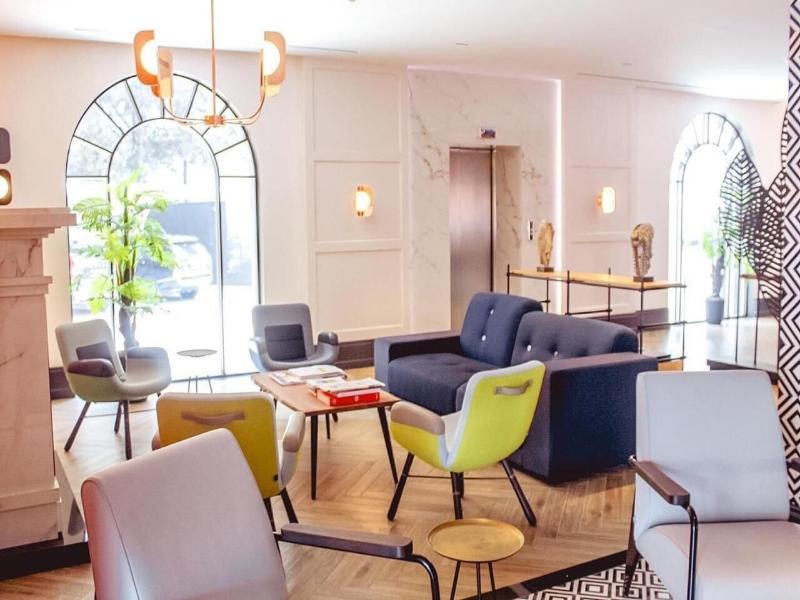
Maritim Hotel Plaza Tirana
Tirana
Spa · Parking
From £161 a night, taxes incl.2 adults · checked 14 Nov, 00:37
★★★★
Iliria hotel
Tirana
Parking
From £110 a night, taxes incl.2 adults · checked 14 Nov, 19:22

★★★★
Chateau Linza Resort
Tirana
Pool · 28 rooms · Parking
See prices and rooms →

★★★★★
Rogner Hotel Tirana
Tirana
Spa · Parking
See prices and rooms →

★★★★
Arté Boutique Hotel
Tirana
14 rooms
From £140 a night, taxes incl.2 adults · checked 14 Nov, 06:52

★★★★★
Mak Albania
Tirana
Pool · Pets allowed · Parking
From £140 a night, taxes incl.2 adults · checked 14 Nov, 00:37
Getting around
Central Tirana is flat and compact: Skanderbeg Square, Blloku, the Pyramid and the Grand Park are all within a walk of one another. Taxis are plentiful for trips to Bunk'Art 1 and the Dajti cable car. For Krujë, Berat and Durrës, take a tour, a bus or a hire car.
When to go
Spring and autumn are warm and sunny without being oppressive, and ideal for walking the city. July and August are hot, which is when Mount Dajti and the coast come into their own. Winters are mild but can be wet.
Questions about visiting Tirana
- What is Tirana best known for?
- Skanderbeg Square, its brightly painted buildings, the relics of Albania's communist era such as the Pyramid and the Bunk'Art museums, and the café and nightlife district of Blloku.
- Is Tirana worth visiting?
- Yes. It is lively, friendly and unlike any other European capital, with fascinating recent history, very good food and coffee, and mountains and the coast both close by.
- How many days do you need in Tirana?
- Two days is enough for the city itself, including a bunker museum and the cable car up Mount Dajti. Add a third or fourth for day trips to Krujë, Berat or the beach at Durrës.
- What is there to do in Tirana with kids?
- Ride the cable car up Mount Dajti, climb the steps of the Pyramid, walk or cycle around the lake in the Grand Park and spend a day on the beach at Durrës.
- Do you need a car in Tirana?
- No. The centre is walkable and taxis are easy to find. A car or an organised tour is useful for day trips further afield.
More guides
- Where to stay in Tirana
- The best things to do in London
- The best things to do in Edinburgh
- The best things to do in Manchester
- The best things to do in York
- The best things to do in Amsterdam
- The best things to do in Birmingham
- The best things to do in Liverpool
- The best things to do in Bristol
- The best things to do in Barcelona
- The best things to do in Budapest
- The best things to do in Cambridge
- The best things to do in Dublin
- The best things to do in Krakow