
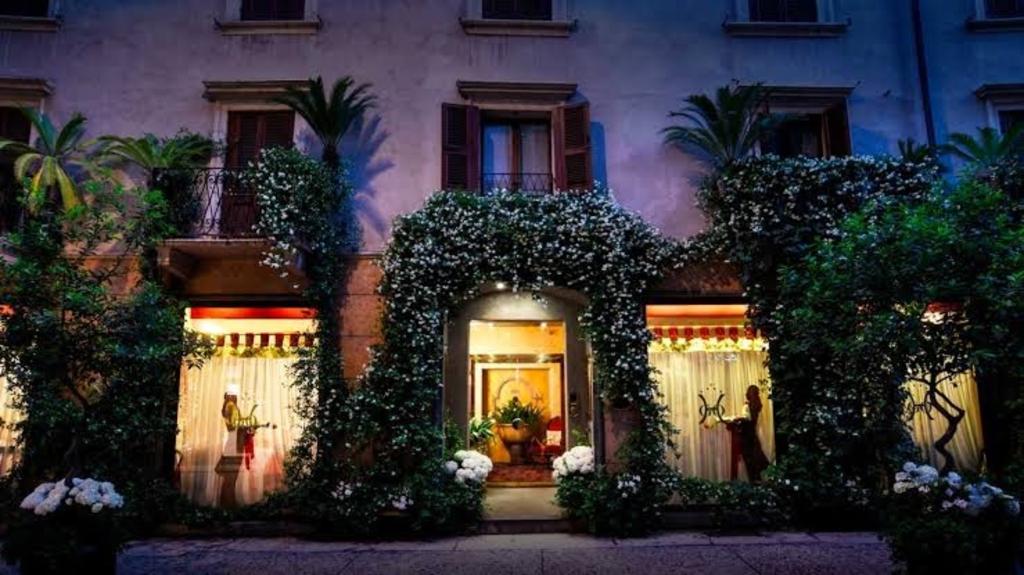
Shakespeare never set foot in Verona, as far as anyone knows, but he did it an enormous favour. Thousands arrive each day looking for a balcony and find something better: a rose-pink city folded into a loop of the River Adige, with a Roman amphitheatre in its main square, frescoed palaces around its market and a castle with a fortified bridge straight out of a storybook.
It is small, handsome and easy. You can walk across the old centre in twenty minutes, although you won't, because there is a spritz to be had in every piazza. Come for a weekend, book an opera under the stars if you are here in summer, and keep a day for the lake or the vineyards on the doorstep.
Don't miss
The big sights
Roman, medieval and Shakespearean Verona, all in the loop of the river.
Verona Arena
Landmark

Photo: Kevin Poh, CC BY 2.0 A Roman amphitheatre from the first century AD, older than the Colosseum and still in use. It fills one side of Piazza Bra, a great oval of pink and white stone that once held gladiator fights and now stages one of the most famous opera festivals in the world every summer. By day you can climb the stone tiers and look down on the square.
Seeing Aida here on a warm night, with thousands of people around you, is one of the great experiences of Italy.
Tip: On the unreserved stone steps, bring or hire a cushion. Roman seating was not built for comfort.
Piazza delle Erbe
Landmark

Photo: Orledio, CC BY-SA 4.0 Verona's market square stands on the site of the Roman forum and may be the prettiest piazza in northern Italy. Frescoed house fronts, a baroque palace, a medieval tower and a fountain topped by a Roman statue all crowd round a row of market umbrellas. Walk through the arch to the quieter Piazza dei Signori, with its statue of Dante and the Gothic tombs of the Scaliger lords close by.
Juliet's House
Landmark

Photo: Dguendel, CC BY 3.0 Romeo and Juliet were fictional, and the famous balcony was added to this medieval house in the 20th century. None of that stops anyone. The little courtyard on Via Cappello is packed all day with people photographing the balcony and the bronze statue of Juliet beneath it. Go knowing it is a piece of theatre, and it is rather charming.
Tip: The courtyard is at its calmest early in the morning.
Castelvecchio
Museum

Photo: Ввласенко, CC BY-SA 3.0 A red-brick castle on the riverbank, built in the 14th century by the Scaliger family who ruled Verona. Its battlemented bridge strides across the Adige on three arches and is open to walkers. Inside the castle is the city's art museum, brilliantly redesigned by the architect Carlo Scarpa in the 20th century, with paintings by Veronese, Bellini and Mantegna.
Torre dei Lamberti
Landmark
The tall medieval tower beside Piazza delle Erbe is the highest point in the old centre, at 84 metres. Climb the stairs or take the lift for a view over a sea of terracotta roofs, the curve of the river and, on a clear day, the first hills of the Alps to the north.
Across the river
Cross the Adige for Roman ruins, gardens and the best view in town.
Ponte Pietra
Landmark

Photo: This Photo was taken by Andrea Bertozzi. Feel free to use my photos, but please , CC BY-SA 4.0 Verona's oldest bridge was first built by the Romans. Blown up in 1945, it was pieced back together afterwards from the stones recovered from the riverbed, which is why its arches are a patchwork of white stone and red brick. It is the loveliest crossing in the city, especially in the evening.
The Roman Theatre
Landmark

Photo: CEphoto, Uwe Aranas, CC BY-SA 3.0 Older than the Arena and far quieter, the Roman theatre is cut into the hillside just across Ponte Pietra, its semicircle of seats facing the river and the city. An archaeological museum occupies a former convent above. In summer the theatre is used for plays, including Shakespeare, and concerts.
Castel San Pietro
Landmark

Photo: Dguendel, CC BY 3.0 From the far end of Ponte Pietra, a long flight of steps, or a short funicular, leads up to the terrace in front of this hilltop barracks. The building is not the point. The view is: the whole of Verona laid out below, the river looping round the old town, bridges, towers and bell towers glowing at sunset.
Giardino Giusti
Nature
One of the finest Renaissance gardens in Italy lies behind a palace on the east bank. An avenue of tall cypresses leads from clipped box parterres, statues and fountains up to a wilder terraced hillside with a grotto and a belvedere. Goethe and Mozart both walked here. It remains a wonderfully peaceful hour.
Churches
Basilica of San Zeno
Landmark

Photo: Adert, CC BY-SA 4.0 A short walk west of the centre stands one of the great Romanesque churches of Italy, built of warm striped stone and brick with a huge rose window. Its bronze doors are covered with lively medieval panels of Bible stories, and above the high altar hangs a glowing triptych by Andrea Mantegna. The crypt holds the tomb of Verona's patron saint.
Sant'Anastasia
Landmark

Photo: Didier Descouens, CC BY-SA 4.0 The largest church in Verona is a soaring Gothic hall of red marble columns and painted vaults, near the river. Two stone hunchbacks hold up the holy water basins by the door. High on a wall above a chapel is Pisanello's fresco of St George and the Princess, one of the masterpieces of the early Renaissance.
Eat and drink
Risotto all'Amarone
Food
Verona's signature dish marries two local treasures: rice grown on the plain south of the city and Amarone, the deep, powerful red wine of the Valpolicella hills. The result is a rich, wine-dark risotto finished with aged cheese. You'll find it on menus all over the old town, alongside bigoli, a thick local spaghetti.
Pandoro
Food
Italy's golden Christmas cake comes from Verona. Tall, star-shaped and feather-light, pandoro is a buttery sweet bread dusted with icing sugar to look like a snowy mountain. It appears in every shop window in December, though some cafés and pastry shops serve it all year.
Aperitivo in Piazza delle Erbe
Nightlife
Early evening in Verona means a drink in the square. The spritz, sparkling wine and soda with a bitter orange liqueur, is the regional favourite, and the terraces of Piazza delle Erbe fill with locals as the market stalls pack up. Order one, watch the swallows wheel round the tower and consider yourself Veronese.
Day trips
Lake Garda
Day trip

Photo: Naturpuur, CC BY 4.0 Italy's largest lake is a short hop west of Verona. On the southern shore, Sirmione sits at the end of a slender peninsula with a moated castle and the ruins of a Roman villa; Lazise and Bardolino are pretty walled towns with waterside promenades. Ferries link the lake's towns, and families come for the big theme parks near Peschiera.
Valpolicella
Day trip

Photo: Aaron Epstein, CC BY 2.0 The hills just north-west of the city are wine country: stone villages, cherry orchards, old villas and vineyards that produce Valpolicella and its famous big brother, Amarone, made from grapes dried for months before pressing. Many estates welcome visitors for tours and tastings. Go with a driver or a tour so everyone can enjoy the glass.
Venice
Day trip
Verona is on the main railway line across northern Italy, which puts Venice within easy reach for a day. Trains arrive at Santa Lucia station, right on the Grand Canal, so you step out of the door and into the city. Start early, and you can be back in Verona for dinner.
Mantua
Day trip

Photo: Velvet, CC BY-SA 4.0 South of Verona, Mantua is a small Renaissance city ringed on three sides by lakes, and a UNESCO World Heritage site. It was the seat of the Gonzaga dukes, whose vast palace holds Mantegna's celebrated painted room, the Camera degli Sposi. This is also where Shakespeare sent Romeo into exile.
Where to stay in Verona
Not sure which area suits you? Read our guide: Where to stay in Verona →

★★★★
Escalus Luxury Suites Verona
Verona
6 rooms · Pets allowed · Parking
From £154 a night, taxes incl.2 adults · checked 14 Nov, 11:37

★★★★
Hotel Indigo Verona - Grand Hotel Des Arts
Verona
62 rooms · Pets allowed · Parking
From £155 a night, taxes incl.2 adults · checked 14 Nov, 11:37

★★★★★
Gabbia D'oro
Verona
26 rooms · Pets allowed · Parking
From £269 a night, taxes incl.2 adults · checked 14 Nov, 11:37
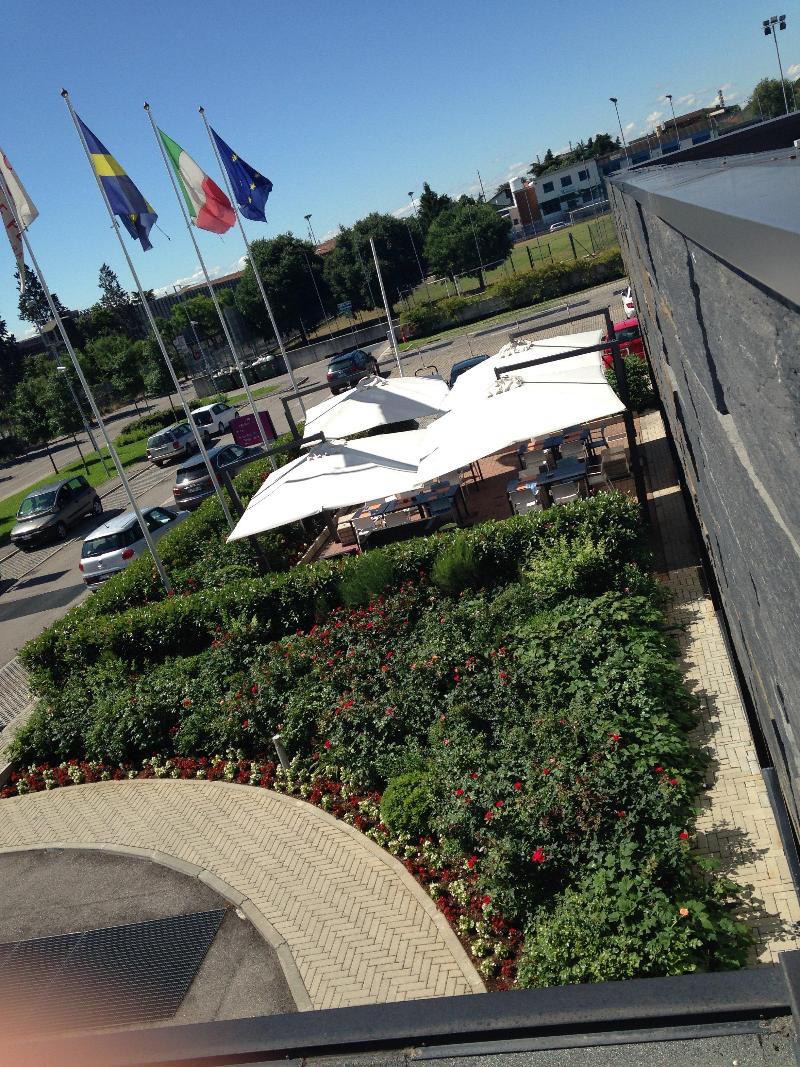
★★★★
Crowne Plaza Verona Fiera
Verona
Spa · Pool · Pets allowed
From £96 a night, taxes incl.2 adults · checked 14 Nov, 11:37

★★★★
Airport Verona Congressi & Relax
Villafranca di Verona
Pool · Parking
From £66 a night, taxes incl.2 adults · checked 14 Nov, 11:37
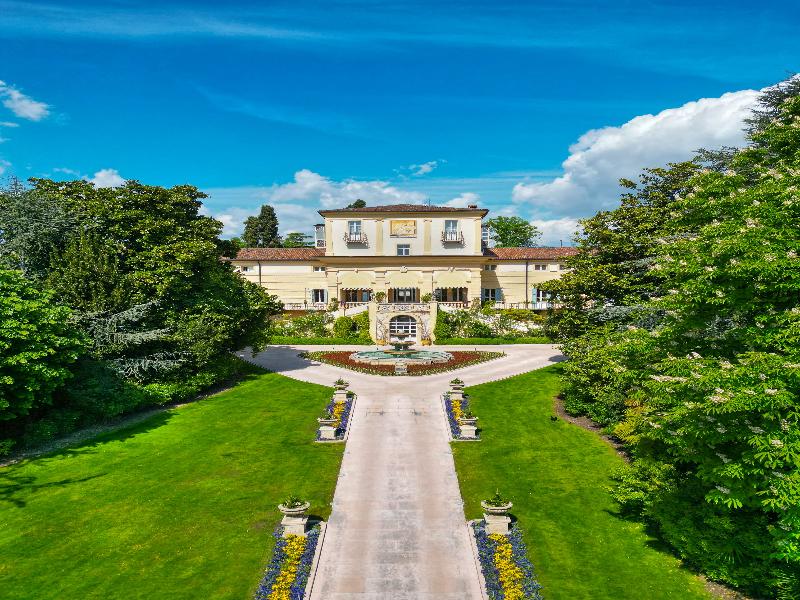
★★★★★
Byblos Art Hotel Villa Amistà
Corrubbio di San Pietro in Cariano
All-inclusive option · Spa · Pool
From £296 a night, taxes incl.2 adults · checked 14 Nov, 05:22
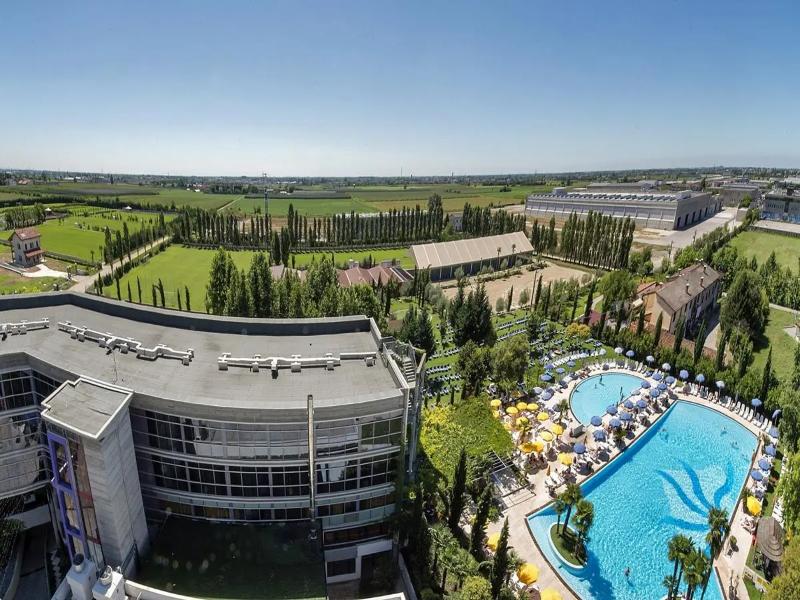
★★★★
Antares Sport Beauty and Wellness
Villafranca di Verona
Pool · Parking
See prices and rooms →

★★★★★
Hotel Due Torri
Verona
Spa · Pets allowed · Parking
From £256 a night, taxes incl.2 adults · checked 14 Nov, 11:37
Getting around
The old centre is small, flat and largely closed to traffic, so you will walk almost everywhere. Buses run from Porta Nuova station to Piazza Bra and out to San Zeno. Trains make Lake Garda, Venice and Mantua simple; a car or tour is best for the Valpolicella wineries.
When to go
The opera festival runs through the summer, when the city is at its liveliest and its hottest. Spring and early autumn are milder and less crowded, and autumn brings the grape harvest in the hills. Winters are cold and can be foggy, with Christmas markets in the squares.
Questions about visiting Verona
- What is Verona best known for?
- The Roman Arena and its summer opera festival, its link with Romeo and Juliet, including Juliet's House and balcony, and a beautifully preserved historic centre that is a UNESCO World Heritage site.
- Is Verona worth visiting?
- Yes. It is one of the most attractive small cities in Italy, compact enough to explore on foot, with Roman monuments, fine churches, good food and wine, and Lake Garda close by.
- How many days do you need in Verona?
- Two days covers the city comfortably. Stay three or four to add Lake Garda, the Valpolicella vineyards or a day in Venice.
- What is there to do in Verona with kids?
- Climbing the tiers of the Arena, the battlements of Castelvecchio, the lift up the Torre dei Lamberti and the funicular to Castel San Pietro all appeal, and Lake Garda's beaches and theme parks are a short trip away.
- Do you need a car in Verona?
- No. The centre is walkable and trains run to Lake Garda, Venice and Mantua. A car is handy only for exploring the wine country and the smaller lake villages.
More guides
- Where to stay in Verona
- The best things to do in London
- The best things to do in Edinburgh
- The best things to do in Manchester
- The best things to do in York
- The best things to do in Amsterdam
- The best things to do in Birmingham
- The best things to do in Liverpool
- The best things to do in Bristol
- The best things to do in Barcelona
- The best things to do in Budapest
- The best things to do in Cambridge
- The best things to do in Dublin
- The best things to do in Krakow