
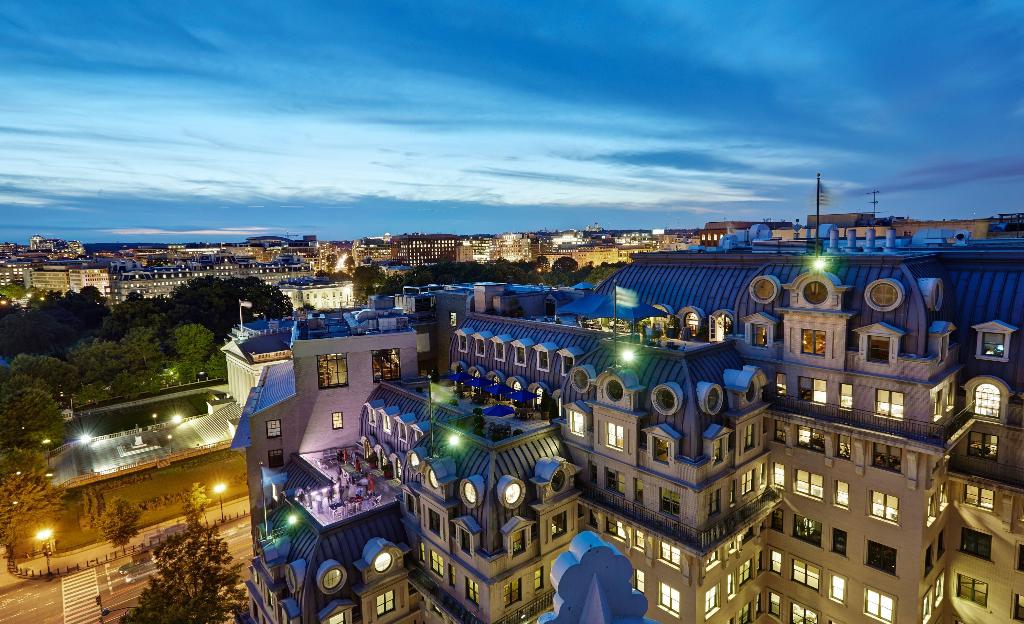
Washington DC is a city built to impress, and it largely succeeds. Marble monuments glow along the National Mall, the Capitol dome floats above the trees, and the world's biggest museum complex sits in a row of grand buildings where most of the doors are free. For a first visit, it's almost absurdly rewarding.
It's also compact and walkable, with proper neighbourhoods behind the monuments: cobbled Georgetown, the cafés of Dupont Circle, the bustle of the Wharf. Give it three or four days. Walk the Mall in the morning, pick two museums rather than ten, and save your evenings for the monuments lit up at night.
Don't miss
Monuments and memorials
The Mall is two miles of history. Walk it, and then walk it again after dark.
The National Mall
Landmark

Photo: Carol M. Highsmith, Public domain The long green lawn between the Capitol and the Lincoln Memorial is the stage for the city's great monuments and museums. The Washington Monument rises in the middle, and the Reflecting Pool mirrors the sky at the western end.
Plan to walk it end to end. It's bigger than it looks.
Tip: Wear comfortable shoes, carry water and take breaks. There is little shade.
The Lincoln Memorial
Landmark

Photo: Ghomsteitler, CC BY-SA 4.0 A Greek-temple memorial with a huge seated statue of Abraham Lincoln gazing across the Reflecting Pool. The steps are where Martin Luther King Jr delivered his I Have a Dream speech in 1963, and the spot is marked. It's moving at any hour, and magical at dusk.
The Washington Monument
Landmark

Photo: Rhododendrites, CC BY-SA 4.0 A plain, soaring white obelisk that dominates the skyline, and the tallest structure in the city. There's an observation deck at the top, with views across the Mall to the Capitol, the White House and the Jefferson Memorial.
Tip: Check the visiting arrangements before you go, because access to the top has changed over time.
The US Capitol
Landmark

Photo: Martin Falbisoner, CC BY-SA 3.0 The white dome at the east end of the Mall is the seat of the US Congress. The visitor centre, underneath the building, has exhibits on its history, and tours take you into the Rotunda and the old Senate chamber.
Tip: Tours must be booked ahead, and they are free.
The White House
Landmark

Photo: Diego Delso, CC BY-SA 3.0 The most famous address in America, set behind railings and lawns on Pennsylvania Avenue. You can't walk in without arrangements, but a photograph from Lafayette Square or the Ellipse is a classic. The visitor centre nearby tells the building's story.
Museums
Most of the best are free, and all of them are enormous.
The Smithsonian museums
Museum

Photo: DiscoA340, CC BY-SA 4.0 The Smithsonian runs the great museums along the Mall, and entry to them is free. The National Air and Space Museum holds the Wright brothers' plane and Apollo hardware. The Natural History Museum has the Hope Diamond. The National Museum of African American History and Culture is among the most powerful in the country.
Pick two and give them a proper morning each.
Tip: Some of the busiest museums need a timed pass, so check their websites before you go.
The National Gallery of Art
Museum

Photo: Alvesgaspar, CC BY-SA 4.0 A hushed marble gallery on the Mall, with the only Leonardo da Vinci painting in the Americas, Ginevra de' Benci, along with fine collections of Impressionist and European art. The sculpture garden next door is a good place for a coffee break.
The Library of Congress
Museum

Photo: Carol M. Highsmith, Public domain The Thomas Jefferson Building is one of the most ornate public buildings in America, with a painted and gilded Main Reading Room that makes you feel you ought to be studying. It's free to visit, and rarely crowded.
Arlington National Cemetery
Landmark

Photo: Protoant, Public domain Across the Potomac in Virginia, row on row of white headstones cover the hillsides. Visitors come for the Tomb of the Unknown Soldier, the guarded ceremony of the changing of the guard and the grave of John F. Kennedy. It's a dignified, quiet and humbling place.
Spring blossom and green space
The Tidal Basin cherry blossoms
Nature

Photo: Alpacaaviator, CC BY-SA 4.0 In spring, the cherry trees around the Tidal Basin burst into pink clouds, with the Jefferson Memorial framed through the branches. Peak bloom usually falls in late March or early April, though it varies from year to year, and it draws huge crowds.
Tip: Go at sunrise on a weekday if you want fewer people in your photos.
Rock Creek Park
Nature
A long strip of woodland that cuts through the city, with hiking trails, a stream and picnic areas. It feels remarkably wild, and makes a peaceful escape from the museums.
Neighbourhoods to wander
Georgetown
Neighbourhood
The city's oldest neighbourhood has cobbled streets, brick townhouses, boutiques and waterfront restaurants. Walk the C&O Canal towpath, stop for a cupcake and watch the Potomac slide past.
Eastern Market
Market

Photo: AgnosticPreachersKid, CC BY-SA 3.0 A long-standing market on Capitol Hill, with fresh produce, baked goods and flowers inside the red-brick hall, and a flea market and craft stalls outside at weekends. It's a great spot for a relaxed weekend breakfast.
The Wharf
Neighbourhood
A redeveloped waterfront along the Potomac, with restaurants, music venues and boats bobbing at the piers. Come for a seafood dinner, a stroll along the promenade and live music in the evening.
Eat and drink
Half-smokes at Ben's Chili Bowl
Food
A DC institution on U Street since 1958, serving a smoky, spicy sausage called a half-smoke smothered in chilli. The neighbourhood was once known as Black Broadway, and the restaurant has been a gathering place ever since.
Maine Avenue Fish Market
Market
An open-air fish market on the Southwest waterfront, one of the oldest in the country, where stalls sell crabs, oysters and shrimp straight from the boats. Grab a steamed crab or a fried fish sandwich and eat it by the water.
Day trips
Mount Vernon
Day trip

Photo: Martin Falbisoner, CC BY-SA 3.0 George Washington's riverside estate in Virginia, a short trip south of the city. The mansion, gardens and farm sit on a bluff above the Potomac, and the exhibits are honest about the lives of the enslaved people who worked here.
Old Town Alexandria
Day trip
A historic port town just across the river, with cobbled King Street, 18th-century townhouses, waterfront restaurants and independent shops. It's an easy afternoon away from the monuments, reachable by Metro.
Where to stay in Washington DC
Not sure which area suits you? Read our guide: Where to stay in Washington DC →
★★★★
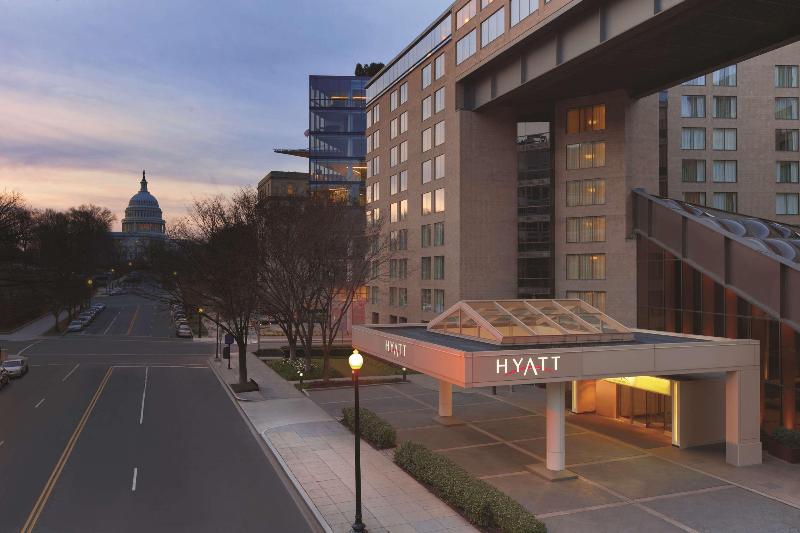
Hyatt Regency Washington on Capitol Hill
Washington
Pool · Parking
See prices and rooms →
★★★★
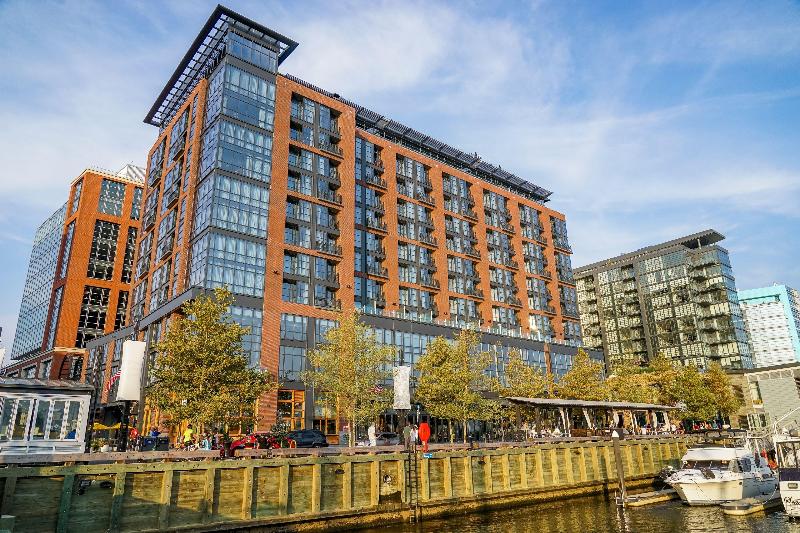
Intercontinental Hotels Washington D.C. The Wharf
Washington
Spa · Pool · Pets allowed
See prices and rooms →
★★★★★
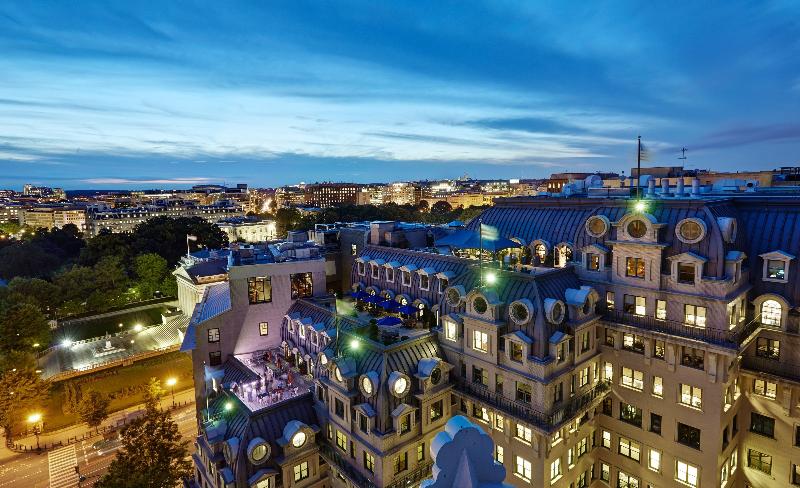
InterContinental The Willard
Washington
Spa · Family-friendly · Pets allowed
See prices and rooms →

★★★★
AC Hotel by Marriott Arlington National Landing
Arlington, Washington DC
Spa · Parking
See prices and rooms →

★★★★
Ac Hotel By Marriott Washington Dc Downtown
Washington
Parking
See prices and rooms →
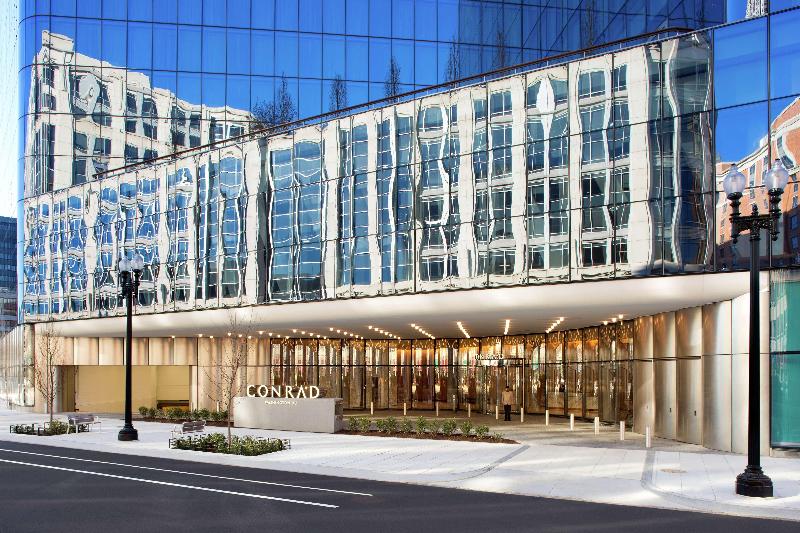
★★★★★
Conrad Washington, DC
Washington DC
Pets allowed · Parking
See prices and rooms →
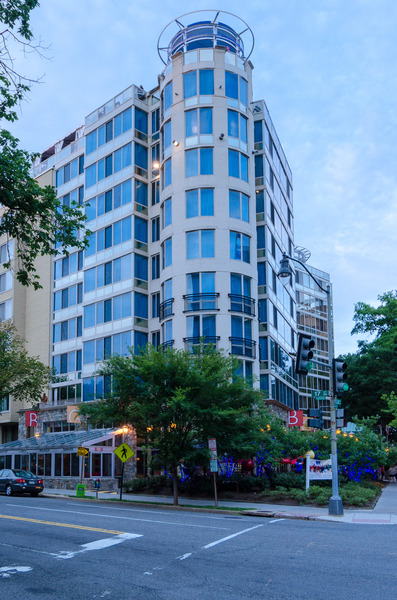
★★★★
Beacon Hotel DC
Washington
Pets allowed · Parking
See prices and rooms →
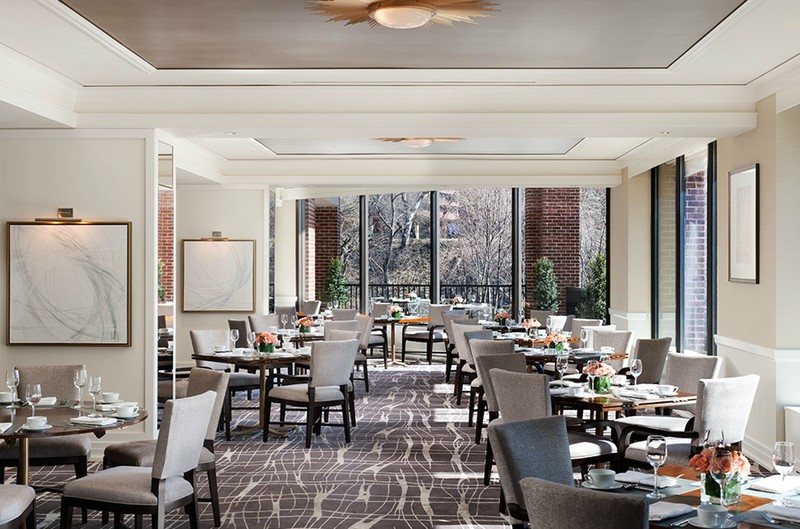
★★★★★
Four Seasons Hotel Washington DC
Washington
Spa · Pool · Parking
See prices and rooms →
Getting around
The Metro is clean, efficient and reaches most sights, and the Mall itself is best done on foot. Ride-hail and bike share fill the gaps, and a car is more trouble than it's worth in the centre.
When to go
Spring brings the cherry blossoms and mild weather, and autumn is crisp and colourful. Summers are hot and humid, though museums are a cool escape, and winter is quieter, with the occasional snow dusting over the monuments.
Questions about visiting Washington DC
- What is Washington DC best known for?
- The National Mall and its monuments, the White House and the Capitol, the free Smithsonian museums and the spring cherry blossoms.
- How many days do you need in Washington DC?
- Three days covers the monuments, a couple of museums and a neighbourhood or two. Four or five days lets you add Arlington, Mount Vernon or Alexandria.
- Are the museums in Washington DC free?
- The Smithsonian museums and the National Gallery of Art are free to enter, though some popular ones ask you to reserve a timed pass in advance.
- Do you need a car in Washington DC?
- No. The Metro, buses and walking cover almost everything, and parking in the centre is expensive and hard to find.
More guides
- Where to stay in Washington DC
- The best things to do in London
- The best things to do in Edinburgh
- The best things to do in Amsterdam
- The best things to do in Barcelona
- The best things to do in Budapest
- The best things to do in Dublin
- The best things to do in Krakow
- The best things to do in Prague
- The best things to do in Berlin
- The best things to do in Lisbon
- The best things to do in Milan
- The best things to do in Paris
- The best things to do in Rome