
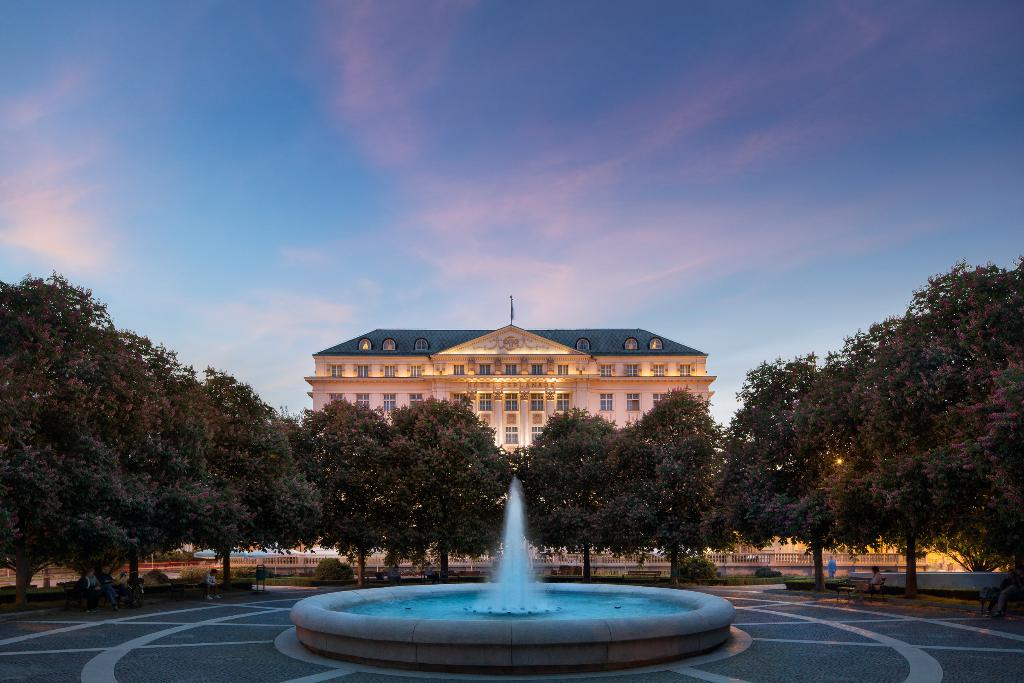
Most visitors to Croatia head straight for the coast and miss the capital altogether. Their loss. Zagreb is a handsome, easy-going Central European city of ochre Habsburg facades, clanking blue trams and pavement cafés that are full at eleven on a Tuesday morning. Nobody seems to be in a hurry, and after a day here you won't be either.
It is a city in two halves. The Upper Town is the medieval bit, all gas lamps, steep lanes and church towers; the Lower Town is the grand nineteenth-century grid of parks, museums and theatres at its feet. A funicular, a few flights of steps and a great deal of coffee connect the two.
Don't miss
The Upper Town
Zagreb's oldest quarter, small enough to cover in a morning.
St Mark's Church
Landmark

Photo: Bernard Gagnon, CC BY-SA 4.0 The picture on every Zagreb postcard. The church itself is a modest medieval building, but its roof is something else: a steep pitch of glazed tiles in red, white and blue, laid out as two enormous coats of arms, one for Zagreb and one for the old kingdom of Croatia, Slavonia and Dalmatia.
It stands in the middle of St Mark's Square, flanked by the Croatian parliament and government buildings, which gives the place a hushed, slightly formal air.
The Stone Gate
Landmark

Photo: Diego Delso, CC BY-SA 3.0 The last surviving gate of the medieval Upper Town is also one of the most quietly moving spots in the city. According to tradition, a great fire in the eighteenth century destroyed the wooden gate but left a painting of the Virgin and Child untouched. The passage has been a shrine ever since.
Candles flicker behind an iron grille, the walls are covered in plaques of thanks, and people on their way to work stop for a moment to pray. Walk through quietly.
Lotrščak Tower and the funicular
Landmark

Photo: Jorge Láscar from Australia, CC BY 2.0 Every day at noon, a cannon is fired from the top of this thirteenth-century tower, loud enough to make the pigeons and the unwary tourists jump. Climb it for a view over the rooftops of the Lower Town to the cathedral spires.
At its foot is the top station of Zagreb's little blue funicular, which has been hauling people between the two halves of the city since the nineteenth century. The ride is over almost before it has begun, which is the charm of it.
Tip: The Strossmayer promenade beside the tower is the best place in the city to watch the sun go down.
Zagreb Cathedral
Landmark

Photo: Bodro777, CC BY-SA 4.0 The twin neo-Gothic spires of the cathedral, on the Kaptol hill just east of the Upper Town, are the tallest things on the skyline and visible from all over the city. The building has medieval roots but owes its present look to a rebuilding after an earthquake in 1880.
Another earthquake, in 2020, did serious damage, and restoration has been a long job. Expect scaffolding, and check on the day whether the interior is open. The square in front, with its golden statue of the Virgin, is worth seeing either way.
Museums and curiosities
The Museum of Broken Relationships
Museum
Zagreb's most original museum began as an art project by two former lovers and now fills a baroque palace in the Upper Town. People from around the world donate an object left over from a relationship that ended, with a short note explaining it.
An axe, a wedding dress, a toaster, a single stiletto. Some of the stories are funny, some are furious and a few will stop you in your tracks. It takes about an hour and stays with you a good deal longer.
Mirogoj Cemetery
Landmark

Photo: Pigpanter, Public domain A cemetery may seem an odd recommendation, but Mirogoj is one of the most beautiful in Europe. Designed in the nineteenth century by the architect Hermann Bollé, it is fronted by long, ivy-covered arcades topped with green copper domes, behind which tree-lined avenues wander between sculpted tombs.
People of every faith and none are buried here side by side. It lies a short bus ride north of the centre, and is at its most atmospheric around All Saints' Day, when it glows with thousands of candles.
Tip: The arcades were damaged in the 2020 earthquake and parts may still be fenced off for repair.
Streets, markets and parks
Dolac Market
Market

Photo: Rilegator, CC BY-SA 4.0 Up a flight of steps from the main square, under a sea of red umbrellas, is the market that has fed Zagreb since the 1930s. Growers from the surrounding villages lay out whatever is in season: cherries, wild asparagus, strings of peppers, great wheels of fresh cheese and cream.
There is a meat and dairy hall underneath and a fish market to one side. Come in the morning, when it is at its liveliest, and buy a picnic.
Tkalčićeva Street
Neighbourhood
This curving, traffic-free street follows the line of a stream that once divided the two rival hilltop settlements that became Zagreb. Today its low, pastel-painted houses hold one café, bar and restaurant after another, with tables filling every inch of pavement.
It is where the city comes for a drink at any hour, and the best place to join in the local sport of sitting over one coffee for a very long time. Evenings are lively rather than rowdy.
The Green Horseshoe
Neighbourhood

Photo: Diego Delso, CC BY-SA 3.0 The pride of the Lower Town is a U-shaped chain of leafy squares and parks laid out in the nineteenth century, lined with the city's grandest buildings: the yellow Art Pavilion, the Croatian National Theatre, academies and museums.
Start at Zrinjevac, with its plane trees, fountains and music pavilion, and stroll south towards the railway station and the Botanical Garden. It is Zagreb at its most elegant, and costs nothing.
Maksimir Park
Nature
Zagreb's oldest and largest public park lies east of the centre at the end of a tram line. Laid out in the English landscape style, it has oak woods, meadows, a string of lakes and a pretty old viewing pavilion at the end of the main avenue.
Locals come to jog, push prams and walk dogs. Visitors come for an hour of green quiet after a morning of sightseeing. It suits families and anyone who wants space to stretch their legs.
Jarun Lake
Nature

Photo: Luka Krstulović, CC BY-SA 2.5 In summer, when the city heats up, Zagreb decamps to Jarun, a large lake in the south-west with pebble beaches, swimming areas, cycle paths and a rowing course. There are cafés and bars along the shore, and it turns into something of an open-air nightspot on warm evenings.
It is a tram ride from the centre and a good half-day for families or anyone missing the sea.
Eat and drink
Štrukli
Food

Photo: Bonč, CC BY-SA 3.0 The dish Zagreb claims as its own: parcels of thin dough filled with fresh cottage cheese, either boiled or baked under a blanket of cream until golden and bubbling. They come savoury or sweet, and are comfort food of the highest order.
You will find them in traditional restaurants all over the city and in a few places that serve nothing else.
Coffee on the špica
Food
Coffee in Zagreb is less a drink than a way of life. On Saturday mornings, half the city dresses up and heads for the café terraces around Flower Square and Bogovićeva Street, to see and be seen, in a ritual known as the špica.
Pull up a chair, order a coffee and take your time. Nobody will rush you, and people-watching here beats most museums.
Day trips
Plitvice Lakes
Day trip

Photo: Tesla Delacroix, CC BY-SA 4.0 Croatia's most famous national park and a UNESCO World Heritage Site: a chain of sixteen turquoise lakes spilling into one another over a long staircase of waterfalls, deep in beech and fir forest. Wooden boardwalks carry you across the water and right past the cascades.
It is a couple of hours south of Zagreb by road, and a long but very doable day out by coach tour, bus or hire car.
Tip: Summer crowds are heavy and entry is timed, so book ahead. Swimming is not allowed in the lakes.
Medvednica and Sljeme
Nature

Photo: Miroslav.vajdic, CC BY-SA 4.0 The forested mountain that fills the northern skyline is Zagreb's back garden. A modern cable car climbs from the edge of the city to Sljeme, the summit, where there are walking trails, mountain huts serving bean stew and strudel, and a small ski area in winter.
On the way up or down, look out for Medvedgrad, a restored medieval fortress on a spur with a wide view over the city.
Samobor
Day trip

Photo: Perun at German Wikipedia, CC BY-SA 3.0 A small, pretty town in the hills west of Zagreb, with a stream running through it, a ruined castle above and a handsome main square. People from the capital have been coming here for Sunday lunch and a walk for generations.
The real reason to make the trip is the kremšnita: a wobbling square of vanilla custard between sheets of flaky pastry, served warm. Order one. Possibly two.
Where to stay in Zagreb
Not sure which area suits you? Read our guide: Where to stay in Zagreb →

★★★★
Dezman Luxury Center
Zagreb
6 rooms
See prices and rooms →

★★★★
Hotel Dubrovnik
Zagreb
Parking
From £117 a night, taxes incl.2 adults · checked 14 Nov, 10:22
★★★★★
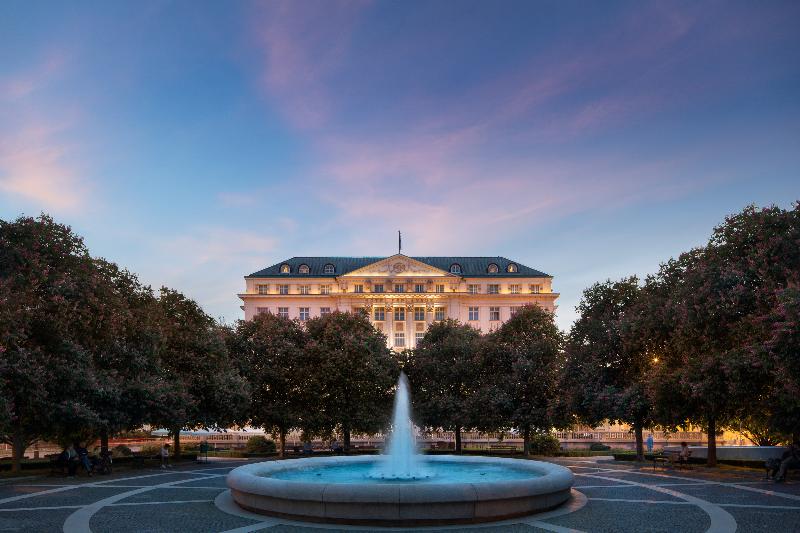
Esplanade Zagreb Hotel
Zagreb
Spa · Parking
From £223 a night, taxes incl.2 adults · checked 14 Nov, 10:22

★★★★
Zonar Zagreb by Maistra City Vibes
Zagreb
Rooftop pool · Pets allowed · Parking
From £71 a night, taxes incl.2 adults · checked 14 Nov, 10:22

★★★★
DoubleTree By Hilton Zagreb
Zagreb
Spa · Pool · Parking
From £137 a night, taxes incl.2 adults · checked 14 Nov, 10:22

★★★★★
Le Premier Boutique Hotel
Zagreb
Spa · 61 rooms · Parking
From £175 a night, taxes incl.2 adults · checked 14 Nov, 10:22

★★★★
Academia
Zagreb
52 rooms · Parking
From £120 a night, taxes incl.2 adults · checked 14 Nov, 10:22

★★★★★
Met Boutique Hotel
Zagreb
26 rooms · Parking
From £242 a night, taxes incl.2 adults · checked 14 Nov, 10:22
Getting around
The centre is compact and mostly flat, and you can walk between almost all the main sights. Blue trams cover the rest of the city, including Maksimir and Jarun. You only need a car, or a tour, for day trips such as Plitvice.
When to go
Late spring and early autumn are warm and made for café terraces. High summer can be hot, and some locals leave for the coast. December is a highlight: Zagreb's Advent markets fill the squares and parks of the centre with lights, music and mulled wine.
Questions about visiting Zagreb
- What is Zagreb best known for?
- The tiled roof of St Mark's Church, the medieval Upper Town, the Museum of Broken Relationships, Dolac Market, a strong café culture and one of Europe's best-loved Advent markets.
- Is Zagreb worth visiting?
- Yes. It is a relaxed, good-looking capital with plenty to see over two days, and far fewer crowds than the Croatian coast. It also makes a good base for a day trip to Plitvice Lakes.
- How many days do you need in Zagreb?
- Two days covers the Upper Town, the Lower Town and a museum or two at an easy pace. Add a third for Plitvice Lakes or a trip up Medvednica.
- Can you visit Plitvice Lakes from Zagreb in a day?
- Yes. The park is around two hours away by road, and coach tours and public buses run from the city. Start early, as you will want several hours in the park itself.
More guides
- Where to stay in Zagreb
- The best things to do in London
- The best things to do in Edinburgh
- The best things to do in Manchester
- The best things to do in York
- The best things to do in Amsterdam
- The best things to do in Birmingham
- The best things to do in Liverpool
- The best things to do in Bristol
- The best things to do in Barcelona
- The best things to do in Budapest
- The best things to do in Cambridge
- The best things to do in Dublin
- The best things to do in Krakow