
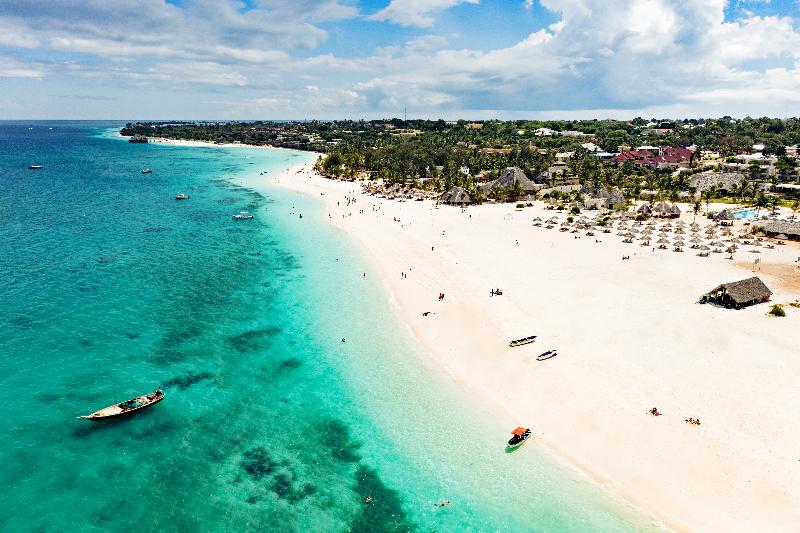
Zanzibar smells of cloves before you see it. For centuries this island off the coast of Tanzania was the hub of the Indian Ocean spice trade, and that history lives on in the carved doors of Stone Town, the minarets, the dhows in the harbour and the food. The beaches are the other half of the deal: white sand, warm water and a reef offshore.
So the smart plan splits the trip. Spend a night or two in Stone Town, wandering and eating, then head north or east for the beaches. Add a spice farm, a forest walk among red colobus monkeys and one day on a dhow, and you have covered the island well.
Don't miss
Stone Town
A UNESCO-listed maze of alleys on the west coast.
Stone Town
Neighbourhood

Photo: Diego Delso, CC BY-SA 4.0 Swahili, Arab, Indian and European influences meet in the old quarter, a warren of narrow lanes, whitewashed coral-stone houses and heavy carved wooden doors studded with brass. It's best explored on foot with no fixed plan, and you'll inevitably get lost.
Freddie Mercury was born here, and the town makes much of it.
Tip: Start early, when it is cooler and quieter, and take a local guide for the history.
Forodhani Gardens
Food

Photo: Rod Waddington from Kergunyah, Australia, CC BY-SA 2.0 On the Stone Town waterfront, a seafront garden transforms at dusk into a night food market. Stalls grill skewers of fish, octopus and prawns, flip Zanzibar pizzas and press sugar-cane juice. It's loud, smoky, fun and the best free show in town.
Tip: Eat where the queues are, and go as the sun sets for the best atmosphere.
The former slave market and Anglican Cathedral
Landmark

Photo: Adam Jones from Kelowna, BC, Canada, CC BY-SA 2.0 Stone Town was once one of the main slave-trading ports of East Africa. The Anglican cathedral stands on the site of the old slave market, and a memorial and the underground chambers nearby are a sobering reminder of that history. A guided visit adds essential context.
Darajani Market
Market

Photo: Erasmus Kamugisha, CC BY-SA 4.0 The town's everyday market, a noisy, colourful hall of spices, fruit, fish and meat, with stalls of fabric and household goods on the streets around it. It's a good place for a sensory introduction to local life and to buy spices to take home.
Tip: Go in the morning, when the fish and produce are freshest.
Nature and wildlife
Jozani Chwaka Bay National Park
Wildlife

Photo: DjordjeMarkovic, CC BY-SA 4.0 Zanzibar's only national park protects forest, mangroves and the island's endemic red colobus monkeys, which are rare elsewhere and used to people on the forest paths. A boardwalk crosses the mangrove swamp, and guides explain the forest ecology.
Tip: Keep a respectful distance from the monkeys and never feed them.
A spice farm tour
Activity

Photo: Irene, CC BY 2.0 Zanzibar is nicknamed the Spice Island, and a half-day tour of a farm shows why. Guides pick cloves, nutmeg, cinnamon, vanilla, black pepper and lemongrass straight off the plants for you to sniff and taste, and often finish with a fruit platter and fresh coconut.
Prison Island
Day trip
A short boat ride from Stone Town, Changuu, or Prison Island, is a small island with a sanctuary of giant Aldabra tortoises, some of them over a century old. A beach and reef alongside make it an easy morning for a swim and a snorkel.
Beaches and sea
Nungwi and Kendwa
Beach

Photo: ObonyoML, CC BY-SA 4.0 At the northern tip of the island, the sand is white, the sea is clear and, unusually for Zanzibar, the tide barely matters, so you can swim at any hour. Nungwi is livelier, with dhow builders at the north end. Kendwa, just around the corner, is calmer and has some of the island's best sunsets.
Paje and Jambiani
Beach

Photo: Matt Kieffer from London, United Kingdom, CC BY-SA 2.0 The east coast is wilder, with long beaches, seaweed farms and a tide that goes out a long way, leaving shallow sandbars and sea-floor pools. Paje has steady winds and is a hub for kitesurfing, while Jambiani is a quiet fishing village with a laid-back feel.
Tip: Check tide times. At low tide the sea can be a long walk from the beach.
Mnemba Atoll
Activity

Photo: I've Got It On Film!, CC BY 2.0 A small, protected island off the north-east coast, ringed by a coral reef that's among the best places to snorkel and dive around Zanzibar. Boats leave from Nungwi and Matemwe, and the water is warm and clear.
Tip: Book a morning trip, when conditions are calmer and the light is best underwater.
The Rock restaurant
Food

Photo: Rod Waddington, CC BY-SA 2.0 A small restaurant perched on a rock just offshore at Michamvi Pingwe, on the south-east coast. At low tide you can walk to it, and at high tide a boat takes you across. It's one of the most famous restaurants in East Africa, and it's about the setting as much as the seafood.
Tip: Book ahead, as space is limited and it is very popular.
Eat and drink
Zanzibar pizza
Food
Not a pizza in the Italian sense but a thin dough stretched, filled with minced meat, egg, vegetables and cheese, folded into a parcel and fried on a griddle. Sweet versions come with banana and chocolate. It's a Forodhani speciality and a cheap, filling supper.
Urojo
Food
Often called Zanzibar mix, urojo is a tangy, spicy soup-like street dish made with potato, crispy bhajia fritters, boiled egg and chutney in a turmeric-yellow broth. Find it at lunchtime from stalls around Stone Town.
Where to stay in Zanzibar
Not sure which area suits you? Read our guide: Where to stay in Zanzibar →

★★★★
Jambo Resort By Mambo Hotels
Paje
Beach 10 m · Spa · Pool
See prices and rooms →
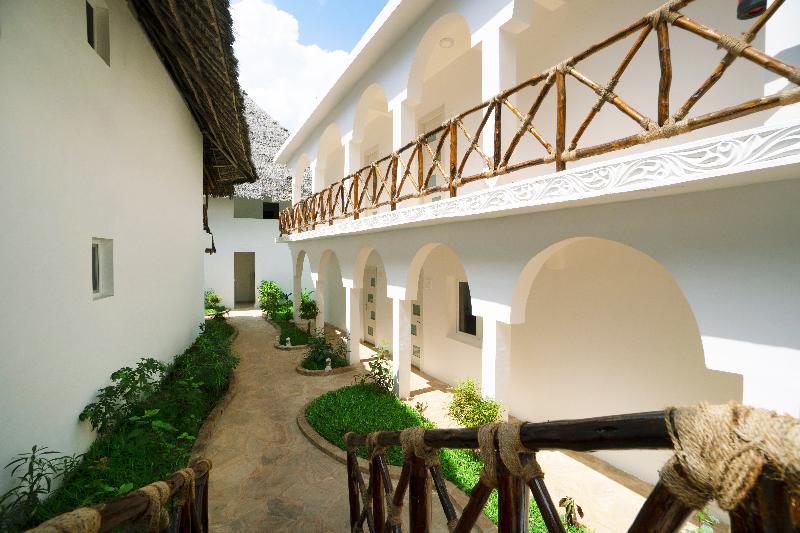
★★★★
AHG Dream's Bay Beach Hotel
Zanzibar
Beach 10 m · All-inclusive option · Spa
See prices and rooms →
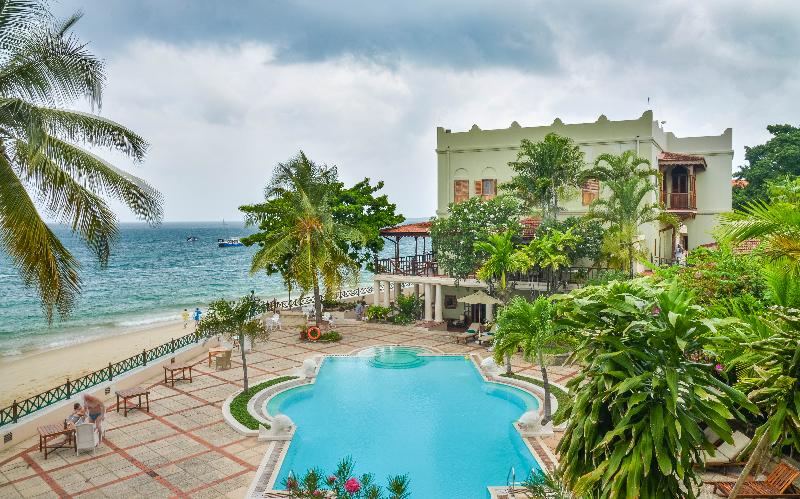
★★★★★
Zanzibar Serena Hotel
Stone Town, Zanzibar
Spa · Pool · 39 rooms
From £341 a night, taxes incl.2 adults · checked 1 Oct, 21:37

★★★★
AHG Hisia Nungwi Experience
Zanzibar
Beach 280 m · All-inclusive option · Pool
See prices and rooms →
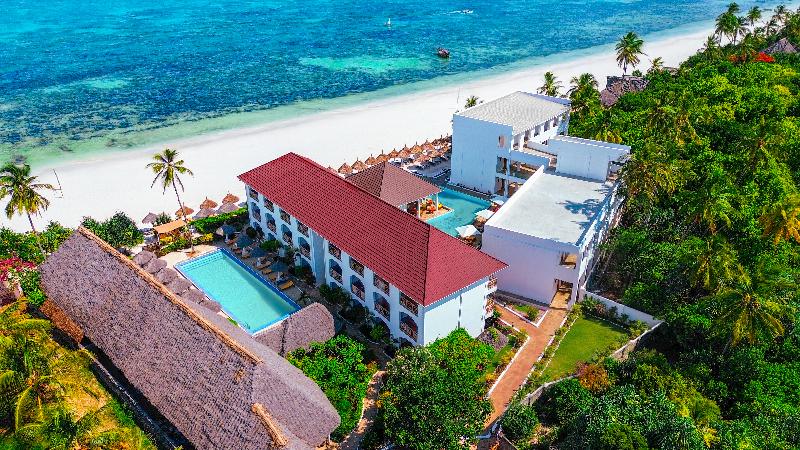
★★★★
AHG Sun Bay Mlilile Beach Hotel - Zanzibar
Matemwe
Beach 10 m · All-inclusive option · Spa
From £129 a night, taxes incl.2 adults · checked 1 Oct, 21:37

★★★★★
Royal Zanzibar Beach Resort
Nungwi
All-inclusive option · Spa · Pool
See prices and rooms →

★★★★
AHG Waridi Beach Resort & Spa
Zanzibar
Beach 10 m · All-inclusive option · Spa
See prices and rooms →
★★★★★
Gold Zanzibar Beach House & Spa
Kendwa
Spa · Pool · Family-friendly
See prices and rooms →
Getting around
Transfers from the airport and between beaches are usually by taxi or pre-booked minibus, and the island is small enough that most journeys take under two hours. Stone Town is walkable. Ferries and short flights link Zanzibar with Dar es Salaam on the mainland.
When to go
The driest and sunniest months are roughly June to October, with another dry spell from around December to February. The long rains fall from about March to May, when some hotels close or drop their rates, and a shorter rainy spell arrives in November.
Questions about visiting Zanzibar
- What is Zanzibar best known for?
- The historic old quarter of Stone Town, spices, white-sand beaches, turquoise water, and a Swahili culture that blends African, Arab and Indian influences.
- Is Zanzibar worth visiting?
- Yes. It combines culture, history and some of the best beaches in East Africa, and it pairs well with a safari on the Tanzanian mainland.
- What is there to do in Zanzibar besides the beach?
- Explore Stone Town, take a spice tour, see the red colobus monkeys at Jozani, snorkel at Mnemba Atoll, and eat at the Forodhani night market.
- How many days do you need in Zanzibar?
- Five to seven nights works well: a couple in Stone Town and the rest on the beach. Add more if you want to see both the north and the east coast.
More guides
- Where to stay in Zanzibar
- The best things to do in London
- The best things to do in Edinburgh
- The best things to do in Amsterdam
- The best things to do in Barcelona
- The best things to do in Budapest
- The best things to do in Dublin
- The best things to do in Krakow
- The best things to do in Prague
- The best things to do in Berlin
- The best things to do in Lisbon
- The best things to do in Milan
- The best things to do in Paris
- The best things to do in Rome