
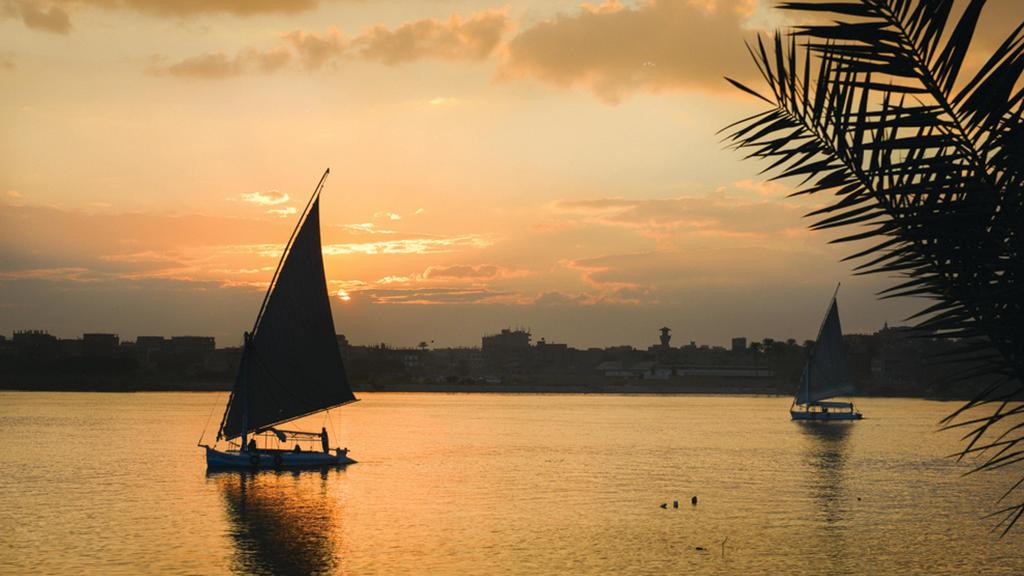
Egypt has the oldest tourist trail in the world, and it still works. The Pyramids of Giza were already ancient when the Greeks arrived. Further south, Luxor and Aswan are an open-air museum of temples and tombs strung along the Nile. And then there's the Red Sea, where the coral is as famous as the pharaohs.
The country rewards a bit of planning. Cairo and Giza take two or three days, Luxor and Aswan another three or four, and the Red Sea resorts are the place to switch off between the two. Go early to every site, because the heat and the crowds both build by midday, and think about a guide who can make the stones talk.
Don't miss
Cairo and Giza
The pharaohs, the pyramids and the biggest city in Africa.
Pyramids of Giza and the Sphinx
Landmark

Photo: kallerna, CC BY-SA 4.0 The only one of the Seven Wonders of the Ancient World still standing. The Great Pyramid of Khufu, built over 4,500 years ago, dominates the Giza plateau alongside two more pyramids and the Great Sphinx, whose weathered face looks out across the desert. Nothing prepares you for the scale up close.
The best views are from the desert panorama point south of the pyramids, particularly at sunrise.
Tip: Arrive early to beat the heat, and agree any camel or horse ride price before you set off.
Grand Egyptian Museum
Museum

Photo: Amr F.Nagy, Public domain A vast museum beside the Giza plateau, designed to house Egypt's ancient treasures, including the objects from Tutankhamun's tomb. Colossal statues greet you in the entrance hall, and the pyramids appear through the glass. Allow plenty of time.
Tip: Book tickets ahead and check current opening details before you travel.
Islamic Cairo and Khan el-Khalili
Market

Photo: Diego Delso, CC BY-SA 3.0 The old city is a dense web of medieval mosques, madrasas and gateways, with Khan el-Khalili, a bazaar that has traded since the fourteenth century, at its heart. Shop for lanterns, spices, perfume and copperware, and rest with mint tea in a café. Go in the evening, when the lanterns come on.
Saqqara and the Step Pyramid
Day trip

Photo: Wknight94 talk, CC BY-SA 3.0 South of Cairo, Saqqara is the ancient burial ground of Memphis. Its Step Pyramid of Djoser, built nearly 4,700 years ago, is the oldest large stone building in the world and the ancestor of every pyramid that followed. Tombs nearby have beautifully painted walls.
Luxor and Aswan
Valley of the Kings
Landmark

Photo: Vyacheslav Argenberg, CC BY 4.0 On the Nile's west bank, a barren valley holds the rock-cut tombs of pharaohs from the New Kingdom, including Tutankhamun, Ramesses II and Seti I. Inside, the walls and ceilings are covered with brightly painted scenes and hieroglyphs whose colours are still vivid after thousands of years.
Tip: Go first thing, before the heat builds, and note that photography rules and ticket options vary by tomb.
Karnak Temple
Landmark

Photo: Diego Delso, CC BY-SA 4.0 The largest religious complex of ancient Egypt, built and added to over some two thousand years. Walk the avenue of sphinxes into the Great Hypostyle Hall, a forest of 134 giant stone columns. It's overwhelming in daylight and atmospheric in the late afternoon.
Tip: Visit at opening time or late in the day, and carry water.
Abu Simbel
Day trip

Photo: Diego Delso, CC BY-SA 4.0 Four colossal statues of Ramesses II guard the front of this rock-cut temple in the far south, near the Sudanese border. In the 1960s the whole complex was cut up and moved to higher ground to save it from the rising waters of Lake Nasser. It's reached from Aswan by road or by short flight.
Tip: Most visitors make a very early start from Aswan, so check your transport before booking.
A Nile cruise
Activity
Float between Luxor and Aswan on a river boat, with temples at Edfu and Kom Ombo along the way. Days are spent on the sundeck watching villages, fields and palm groves slip by, and nights moored at the bank. It's the slowest and most relaxing way to see ancient Egypt.
The Red Sea and Sinai
Ras Mohammed National Park
Nature

Photo: Diego Delso, CC BY-SA 4.0 At the southern tip of the Sinai peninsula near Sharm el-Sheikh, this marine park has some of the Red Sea's best coral reefs, with steep walls dropping into deep blue water. Snorkellers and divers see turtles, reef sharks and clouds of brightly coloured fish.
Tip: Take a boat trip from Sharm el-Sheikh, and use reef-safe sun cream.
Giftun Islands
Nature

Photo: user:vberger, Public domain Off Hurghada, a group of small islands ringed with white sand and coral reef is the classic Red Sea day trip. Boats take you out for snorkelling in clear, shallow water, with a barbecue lunch on board and time on the beach.
Saint Catherine's Monastery and Mount Sinai
Day trip

Photo: Berthold Werner, CC BY-SA 3.0 In the mountains of southern Sinai, Saint Catherine's is one of the oldest working Christian monasteries in the world, a UNESCO World Heritage Site. Many visitors also climb Mount Sinai before dawn, to watch the sun rise over a sea of rugged peaks.
Tip: Bring a torch and warm layers for the pre-dawn climb.
Eat and drink
Koshari
Food

Photo: Basma, CC BY-SA 4.0 Egypt's national dish is a bowl of rice, lentils and macaroni, topped with spiced tomato sauce, crispy fried onions and chickpeas, with chilli and vinegar on the side. It's cheap, filling and delicious, and you'll find it in dedicated koshari restaurants and street stalls across the country.
Ful medames and ta'amiya
Food
Breakfast, Egyptian-style: slow-cooked fava beans mashed with olive oil, lemon and cumin, served with warm flatbread and ta'amiya, Egypt's version of falafel, made with fava beans rather than chickpeas. Order a glass of sweet tea alongside.
Where to stay in Egypt
Not sure which area suits you? Read our guide: Where to stay in Egypt →
★★★★
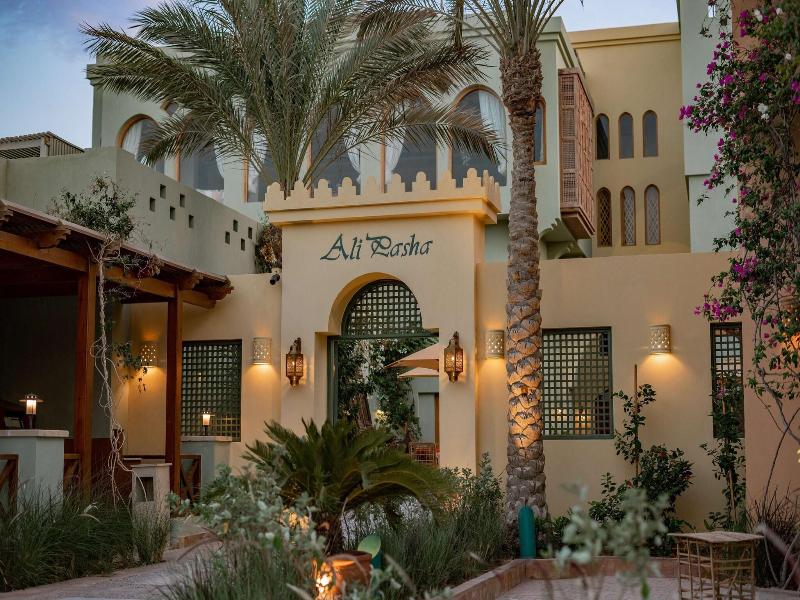
Ali Pasha
El Gouna
Beach 200 m · Pool · 41 rooms
See prices and rooms →
★★★★
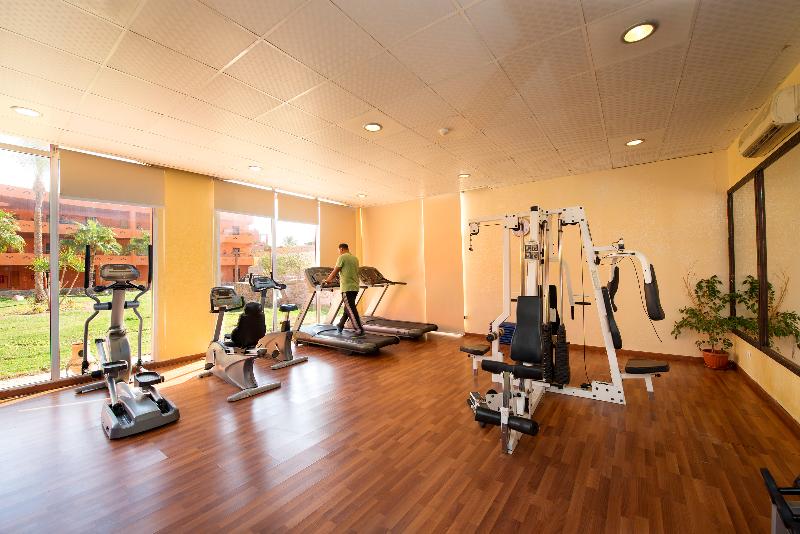
Amwaj Oyoun Resort & Casino
Sharm el Sheikh
Beach 50 m · All-inclusive option · Spa
From £114 a night, taxes incl.2 adults · checked 1 Oct, 17:37
★★★★★
Semiramis InterContinental Cairo
Cairo
Spa · Pool · Parking
From £251 a night, taxes incl.2 adults · checked 1 Oct, 20:38
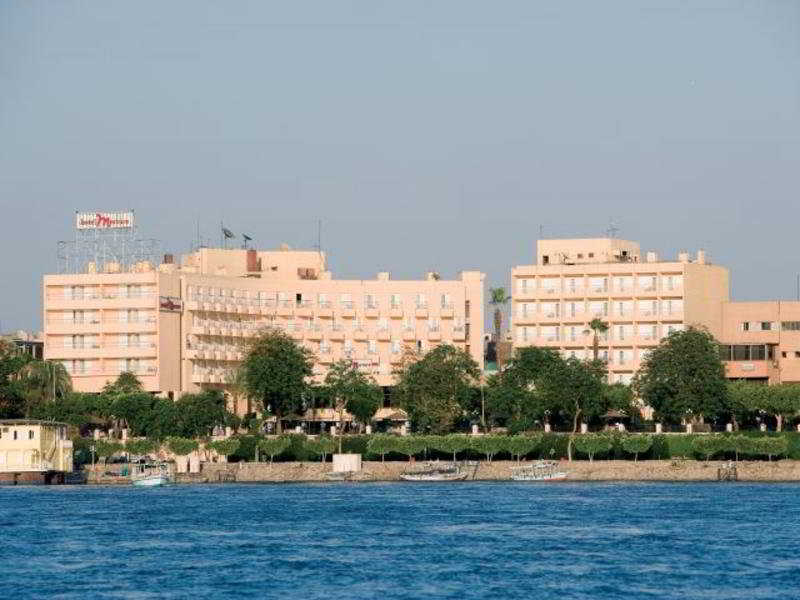
★★★★
Aracan Eatabe Luxor Hotel
Luxor
Pool · Parking
See prices and rooms →
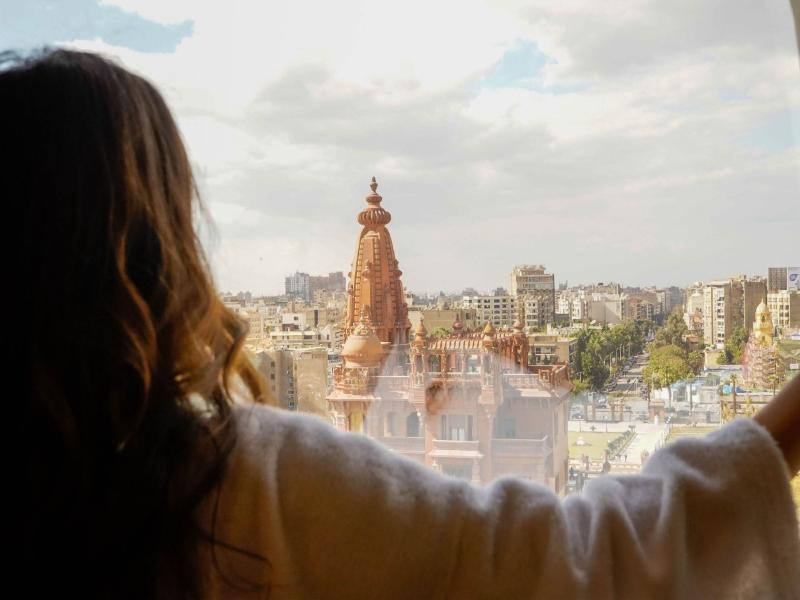
★★★★
Baron Hotel Cairo
Cairo
Pool
From £101 a night, taxes incl.2 adults · checked 1 Oct, 20:38

★★★★★
Sofitel Winter Palace Luxor
Luxor
Pool · Parking
See prices and rooms →

★★★★
Basma Aswan
Aswan Governorate
Spa · Pool · Family-friendly
See prices and rooms →
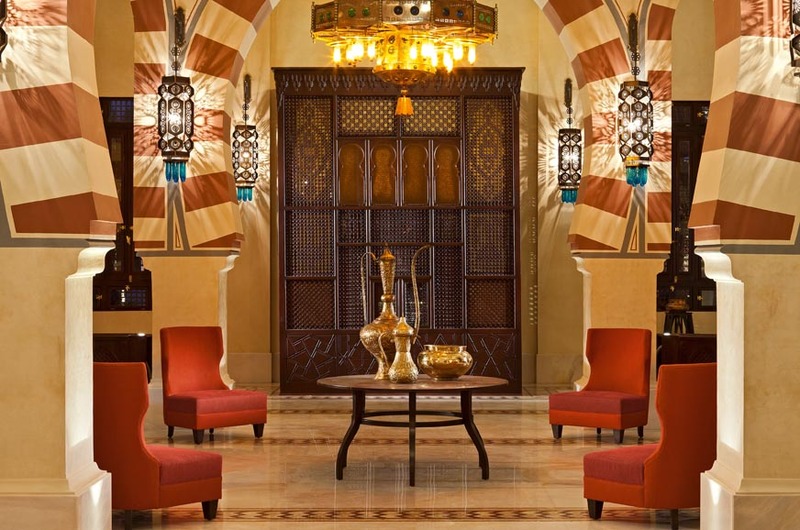
★★★★★
Old Cataract Aswan
Aswan
Spa · Pool · Family-friendly
See prices and rooms →
Getting around
Domestic flights link Cairo with Luxor, Aswan and the Red Sea, and sleeper trains run between Cairo and Luxor or Aswan. Within cities, taxis and ride-hailing apps are cheap. Many visitors book guided tours or a driver for the main sites, which also makes it easier to avoid hassle.
When to go
The cooler months, roughly October to April, are best for sightseeing, particularly in Luxor and Aswan, where summers are extremely hot. The Red Sea is warm for swimming almost all year, and Cairo can be busy and warm in summer.
Questions about visiting Egypt
- What is Egypt best known for?
- The Pyramids of Giza and the Sphinx, the temples and tombs of Luxor and Aswan, the Nile, and the coral reefs of the Red Sea.
- Is Egypt worth visiting?
- Yes. The ancient sites are among the most remarkable in the world, and you can combine them with a relaxing stay at a Red Sea resort.
- What is there to do in Egypt with kids?
- The pyramids and Sphinx, a felucca or Nile cruise, snorkelling trips from Hurghada or Sharm el-Sheikh, and a visit to the Grand Egyptian Museum are all popular with children.
- How many days do you need in Egypt?
- A week lets you see Cairo, Luxor and Aswan at a steady pace. Add three or four days on the Red Sea if you want to relax or dive.
- Do you need a car in Egypt?
- No. Most visitors use flights, trains, taxis, tours and drivers rather than driving themselves, because traffic in Cairo is heavy.
More guides
- Where to stay in Egypt
- The best things to do in London
- The best things to do in Edinburgh
- The best things to do in Amsterdam
- The best things to do in Barcelona
- The best things to do in Budapest
- The best things to do in Dublin
- The best things to do in Krakow
- The best things to do in Prague
- The best things to do in Berlin
- The best things to do in Lisbon
- The best things to do in Milan
- The best things to do in Paris
- The best things to do in Rome