
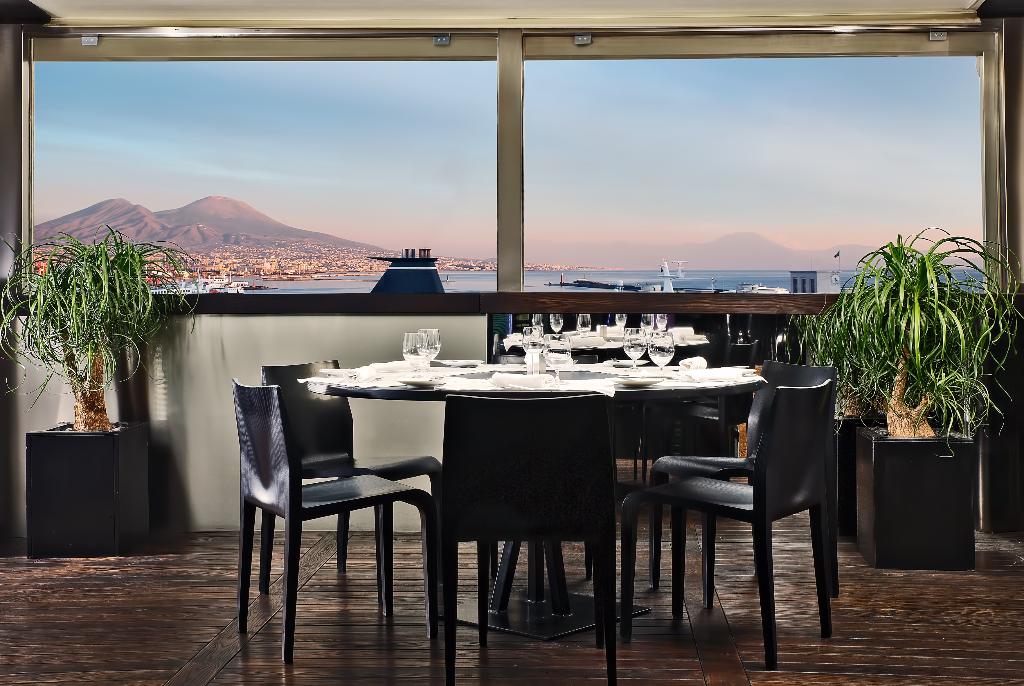
Naples is loud, chaotic, crumbling and utterly magnificent. Scooters weave through alleys strung with washing, shrines to saints and footballers sit side by side, and every other doorway seems to lead to a baroque church or a pizzeria that claims to be the best in the world. It is not a city that tries to charm you, which is exactly why it does.
It also sits on one of the most remarkable bays in the world. Vesuvius looms over the city, Pompeii and Herculaneum lie at its feet, and ferries leave the port for Capri, Procida and the Amalfi Coast. You could spend a week here and barely scratch the surface.
Don't miss
Old Naples
The historic centre, built on the street plan of the ancient Greek city, is a UNESCO World Heritage Site.
Spaccanapoli
Neighbourhood

Photo: TatsuoTabei, Public domain The name means 'Naples-splitter': a long, dead-straight street that slices through the old centre along the line of the ancient Greek city. Walk it end to end, past churches, palazzi, pastry shops and street shrines, and duck into the side streets as you go.
Don't miss the majolica-tiled cloister of Santa Chiara, or Via San Gregorio Armeno, the lane of workshops making figurines for nativity scenes, which range from shepherds to footballers and politicians.
Tip: Keep valuables out of sight in the busy lanes, as you would in any big city.
Cappella Sansevero
Museum

Photo: David Sivyer from United Kingdom, CC BY-SA 2.0 A small chapel that holds one of the most astonishing sculptures in Italy: Giuseppe Sanmartino's Veiled Christ, an 18th-century marble figure under a shroud so fine and transparent that it is hard to believe it is carved from stone. Down in the crypt, two eerie 'anatomical machines' add a macabre twist.
Tip: It is small and very popular, so book a timed ticket online in advance.
Napoli Sotterranea
Activity
Beneath the old town lies a maze of tunnels and cisterns dug by the Greeks and Romans, later used as air-raid shelters during the Second World War. Guided tours lead you down through candlelit passages, some of them very narrow, and into the remains of a Roman theatre hidden inside ordinary houses.
Quartieri Spagnoli
Neighbourhood
Built in the 16th century to house Spanish troops, this steep grid of narrow streets off Via Toledo is Naples at its most intense: washing lines, tiny shrines, motorbikes and street food. It is also home to a huge, much-visited mural of Diego Maradona, still a saint in this city.
Museums, palaces and the seafront
National Archaeological Museum
Museum

Photo: Unknown authorUnknown author, Public domain Pompeii and Herculaneum make far more sense after a visit here. Most of the finest treasures dug from the two cities are on show: dazzling floor mosaics, including the famous Alexander Mosaic, vivid frescoes, bronzes and everyday objects. The Farnese collection of ancient sculpture is just as impressive, and the 'Secret Cabinet' of erotic art raises eyebrows.
Tip: Give it at least half a day, ideally before you visit Pompeii.
Museo di Capodimonte
Museum
A Bourbon royal palace on a hill above the city, now home to one of Italy's great picture galleries, with Caravaggio's Flagellation of Christ, Titian, Raphael and Botticelli. It is rarely crowded, and the huge wooded park around it is a breath of fresh air.
Piazza del Plebiscito
Landmark
Naples' grandest square is a vast open space framed by the Royal Palace and the colonnaded church of San Francesco di Paola, modelled on the Pantheon in Rome. Next door are the Teatro di San Carlo, one of the oldest working opera houses in Europe, and the soaring glass arcade of the Galleria Umberto I.
Tip: Stop for an espresso and a pastry at one of the grand old cafés nearby.
Castel dell'Ovo and the lungomare
Landmark

Photo: Bernard Gagnon, CC BY 4.0 Naples' seafront promenade runs along the bay with Vesuvius on the horizon, and is where the city comes to stroll at sunset. At its heart is Castel dell'Ovo, a chunky medieval castle on a little island, named after a legend that the poet Virgil hid a magic egg in its foundations. The tiny fishing harbour beside it is lined with seafood restaurants.
Eat and drink
Naples gave the world pizza, and it is fiercely proud of it.
Pizza napoletana
Food

Photo: Mister No, CC BY 3.0 Real Neapolitan pizza is soft, chewy and blistered from a blazing wood-fired oven, with a puffy crust and a soupy middle. Stick to the classics: the margherita (tomato, mozzarella, basil) and the marinara (tomato, garlic, oregano). The art of the Neapolitan pizza maker is even recognised by UNESCO.
Try pizza fritta, a deep-fried folded pizza, from a street stall too.
Tip: The famous pizzerias on and around Via dei Tribunali have long queues. Put your name down and wait; it moves quickly.
Sfogliatella
Food

Photo: Saggittarius A, CC BY-SA 4.0 Naples' signature pastry is a shell-shaped parcel of crackling, paper-thin layers (the riccia) or soft shortcrust (the frolla), filled with ricotta, semolina and candied citrus and best eaten warm. Its partner in crime is the babà, a little rum-soaked sponge. Wash both down with a short, strong espresso.
Pompeii, Herculaneum and Vesuvius
All three are an easy trip on the Circumvesuviana train from the city centre.
Pompeii
Day trip

Photo: Commonists, CC BY-SA 4.0 Buried by Vesuvius in AD 79 and rediscovered centuries later, Pompeii is an entire Roman city frozen in time: paved streets rutted by cart wheels, temples, bathhouses, bakeries, villas with painted walls and the haunting plaster casts of its victims. It is huge, and you can easily spend a day.
Tip: Bring water, a hat and comfortable shoes, as there is little shade. Book tickets online and arrive early.
Herculaneum
Day trip

Photo: Sumit Surai, CC BY-SA 4.0 Smaller than Pompeii but better preserved, Herculaneum was buried deep in volcanic material that kept upper floors, wooden beams and even furniture intact. It is far more manageable in a morning, and many visitors find it more moving.
Mount Vesuvius
Nature

Photo: Horcrux, CC BY-SA 4.0 The volcano that destroyed Pompeii is still active, and you can walk up to the rim of its crater. A road climbs most of the way, then a gravel path zigzags to the top, where you can peer into the crater and look out over the whole Bay of Naples.
Tip: Tickets for the crater path must be booked online in advance. It can be windy and much cooler at the top.
Islands and coast
Capri
Day trip

Photo: Berthold Werner, CC BY-SA 3.0 Ferries from Naples' port reach Capri, the glamorous island of the Faraglioni sea stacks, the chic Piazzetta and lemon-scented lanes. Take a boat around the coast, ride the chairlift up Monte Solaro from Anacapri, or visit the Blue Grotto when the sea allows.
Tip: Catch an early ferry, before the day-trippers arrive.
Procida
Day trip

Photo: Velvet, CC BY-SA 4.0 Capri's laid-back little neighbour is a fishing island of pastel houses, best seen at the harbour of Marina Corricella. Named Italian Capital of Culture in 2022, it is still refreshingly unpolished.
The Amalfi Coast
Day trip

Photo: Bernard Gagnon, CC BY 4.0 South of Naples, beyond Sorrento, cliffs plunge into the sea and villages like Positano, Amalfi and Ravello cling to the slopes. It is a long day from the city, but the views from the coast road and the ferries are some of the most famous in Italy.
Where to stay in Naples
Not sure which area suits you? Read our guide: Where to stay in Naples →

★★★★
HABITA79, Pompeii, a Tribute Portfolio Hotel
Pompei
Spa · Pool · 79 rooms
See prices and rooms →
★★★★
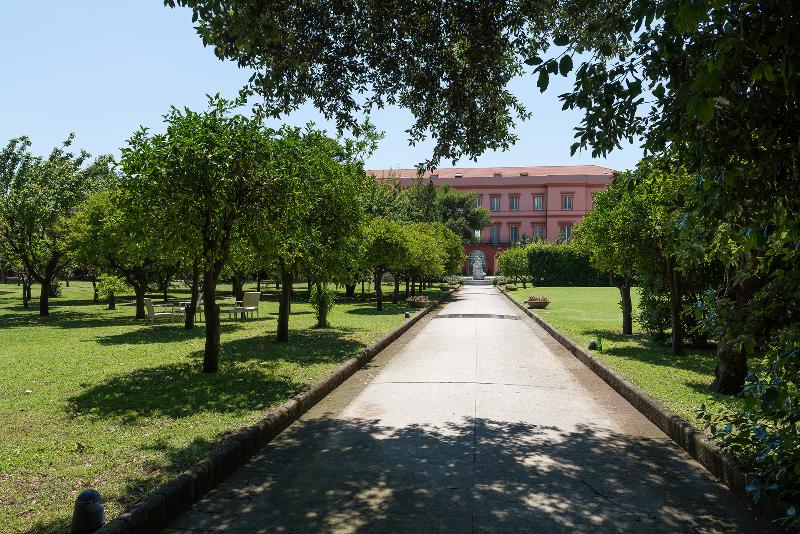
Miglio d'Oro Park Hotel
Ercolano
Pets allowed · Parking
See prices and rooms →

★★★★★
Romeo
Napoli
Spa · Pool · Family-friendly
From £717 a night, taxes incl.2 adults · checked 1 Oct, 18:08

★★★★
Beauty Farm Villa Luisa
Pozzuoli
Beach 100 m · Spa · Pool
From £140 a night, taxes incl.2 adults · checked 1 Oct, 18:08

★★★★
Agave Hotel
Pozzuoli
27 rooms · Family-friendly · Parking
From £75 a night, taxes incl.2 adults · checked 1 Oct, 18:08
★★★★★
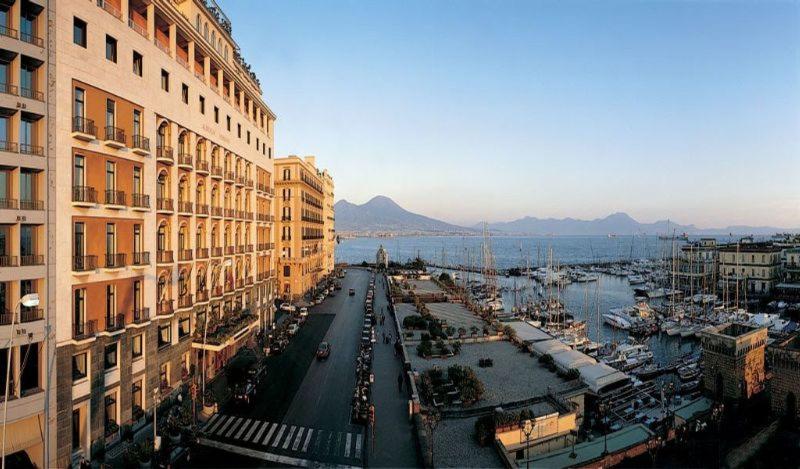
Grand Hotel Vesuvio Naples
Naples
Pool · Parking
From £1,324 a night, taxes incl.2 adults · checked 1 Oct, 18:08
★★★★
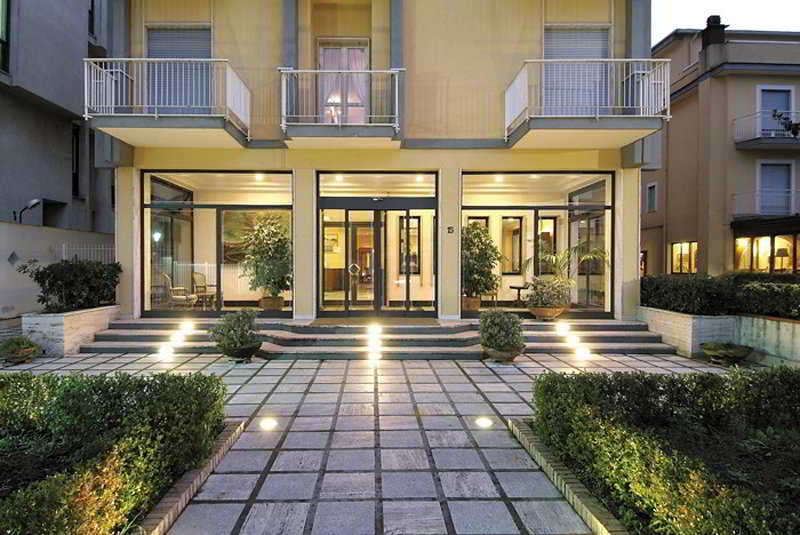
American Hotel
Pozzuoli
Beach 2 km · Parking
See prices and rooms →
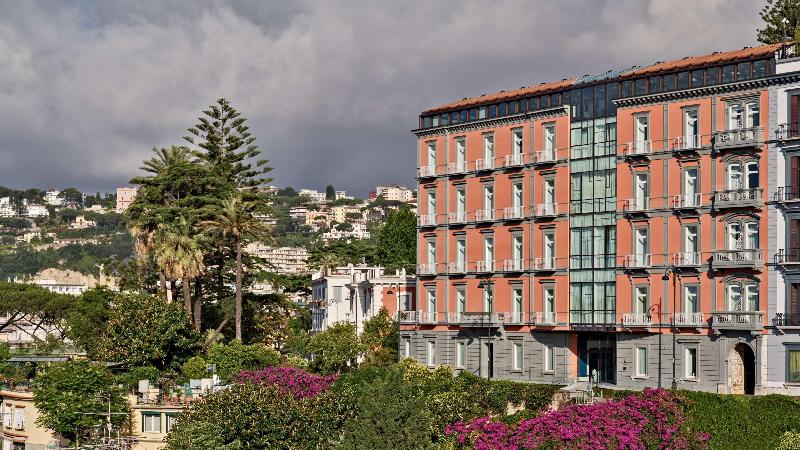
★★★★★
de Bonart Naples-Curio Collection by Hilton
Naples
Beach 550 m · Spa · 72 rooms
See prices and rooms →
Getting around
The historic centre is best explored on foot, and the metro and funiculars help with the hills. The Circumvesuviana train runs to Herculaneum, Pompeii and Sorrento, and ferries and hydrofoils leave the port for Capri, Procida and Ischia. Driving in Naples is not for the faint-hearted.
When to go
Spring and autumn are ideal for sightseeing and the ruins. Summer is hot, and Pompeii has little shade. Winter is mild and quiet, and Christmas brings crowds to the nativity workshops of San Gregorio Armeno.
Questions about visiting Naples
- What is Naples best known for?
- Pizza, its UNESCO-listed historic centre, the National Archaeological Museum, and being the gateway to Pompeii, Herculaneum, Vesuvius, Capri and the Amalfi Coast.
- Is Naples worth visiting?
- Yes. It is chaotic and not always polished, but it is one of Italy's most atmospheric cities, with superb food, art and history and the best day trips in the south.
- How many days do you need in Naples?
- Allow two days for the city itself, plus a day for Pompeii and Herculaneum and another for Capri or the coast.
- Can you visit Pompeii from Naples?
- Easily. The Circumvesuviana train runs from the city centre to the Pompei Scavi station by the entrance, and stops at Herculaneum on the way.
More guides
- Where to stay in Naples
- The best things to do in London
- The best things to do in Edinburgh
- The best things to do in Amsterdam
- The best things to do in Barcelona
- The best things to do in Budapest
- The best things to do in Dublin
- The best things to do in Krakow
- The best things to do in Prague
- The best things to do in Berlin
- The best things to do in Lisbon
- The best things to do in Milan
- The best things to do in Paris
- The best things to do in Rome