
Nara was Japan's first permanent capital, and it has never quite got over it. For most of the 8th century this was the centre of the country, and the emperors left behind temples on a scale that still stops people in their tracks: a bronze Buddha the height of a building, a hall of timber as big as a cathedral, lantern-lined paths running into ancient forest. Then the court moved on and Nara went quiet.
That quiet is the charm. Most of the great sights sit in or around one large park, which you share with more than a thousand very confident deer. Day-trippers from Kyoto and Osaka see it in an afternoon. Stay the night and you get the lanterns, the lanes of Naramachi and the temples to yourself.
Don't miss
The big sights
All within walking distance of each other on the eastern side of town.
Todai-ji
Landmark

Photo: ONO Masanobu, CC0 Everything about Todai-ji is outsized. You enter through the Nandaimon, a towering wooden gate guarded by two fierce carved figures, and cross a courtyard to the Great Buddha Hall, one of the largest wooden buildings in the world. Inside sits the Daibutsu, a bronze Buddha about 15 metres tall, cast in the 8th century.
Behind the Buddha, one of the hall's pillars has a hole at its base said to be the size of the statue's nostril. Children queue to wriggle through it for good luck.
Tip: Arrive early or late in the day. The hall is at its calmest before the tour groups from Kyoto and Osaka roll in.
Nara Park
Nature

Photo: merec0, CC BY 2.0 The broad park at the foot of the hills ties the temples together, and it belongs to the deer. More than a thousand of them roam free, regarded for centuries as messengers of the gods. They wander the lawns, wait at crossings and loiter outside the shops that sell deer crackers.
They are wild animals with good manners and firm opinions. Many have learned to bow for a cracker, and a few will nudge if you are slow to hand one over.
Tip: Only feed them the official crackers, keep maps and paper bags out of reach, and watch small children around the bolder stags.
Kasuga Taisha
Landmark

Photo: Gzzz, CC BY-SA 4.0 Nara's great Shinto shrine sits at the edge of a primeval forest, reached along a path lined with hundreds of moss-covered stone lanterns. The shrine itself is bright vermilion, hung with rows of bronze lanterns donated by worshippers over the centuries.
The lanterns are lit twice a year, at festivals in February and August, and the effect is magical. On any other day the walk through the woods is reason enough to come.
Kofuku-ji
Landmark

Photo: Zairon, CC BY 4.0 Once the family temple of the powerful Fujiwara clan, Kofuku-ji stands at the western entrance to the park. Its five-storey pagoda is one of the tallest in Japan and the emblem of the city, mirrored on still days in the Sarusawa Pond below.
The National Treasure Museum here holds some of the finest Buddhist sculpture in the country, including the three-faced, six-armed Ashura, which has something close to a fan club.
Tip: The pagoda is undergoing long-term restoration and may be under cover when you visit. The museum and halls are worth it regardless.
Nigatsu-do
Landmark

Photo: Christophe95, CC BY-SA 4.0 Up a lantern-lined stair on the hillside behind the Great Buddha Hall, this sub-temple of Todai-ji has a wide wooden balcony that looks out across the tiled roofs to the city and the hills beyond. It is free to wander and wonderful at sunset. Every March it hosts Omizutori, a fire ceremony in which huge burning torches are carried along the balcony, showering sparks on the crowd below.
Gardens, museums and views
Isuien Garden
Nature

Photo: Kimon Berlin (Gribeco), CC BY-SA 4.0 A classic Japanese stroll garden of ponds, stepping stones and tea houses, tucked between Kofuku-ji and Todai-ji. It is designed to borrow its backdrop: the great gate of Todai-ji and the hills behind appear as if they were part of the planting. Come for an hour of calm when the park gets busy.
Nara National Museum
Museum
Inside the park, this is one of Japan's leading museums of Buddhist art, with a hall devoted to sculpture that puts faces to the faith behind the temples. Each autumn it stages a short, hugely popular exhibition of treasures from the Shoso-in, the 8th-century imperial storehouse.
Mount Wakakusa
Nature

Photo: 名古屋太郎, CC BY-SA 3.0 The smooth grassy hill behind the park is an easy climb, with deer for company and a view over the whole of Nara from the top. It suits anyone with spare energy and a clear evening.
On a night in late January the dead grass on the hillside is set alight in the Wakakusa Yamayaki festival, preceded by fireworks and visible across the city.
Neighbourhoods to wander
Naramachi
Neighbourhood

Photo: Maarten Heerlien from Voorschoten, The Netherlands, CC BY 2.0 South of Sarusawa Pond, the old merchant quarter is a grid of narrow lanes lined with wooden machiya townhouses, their fronts hung with red cloth monkey charms. Many now hold cafés, craft shops, sake breweries and small museums, and one restored townhouse is open to walk through. It is the place to slow down after the temples. Come for coffee, stay for dinner, and look out for sake tastings.
Higashimuki and the mochi shops
Food
The covered shopping arcade running south from Kintetsu Nara station is where the city snacks. The famous stop is the mochi shop at its southern end, where rice cakes are pounded at furious speed with wooden mallets before a cheering crowd. They are filled with sweet red bean, dusted with roasted soybean flour and best eaten warm.
Eat and drink
Kakinoha-zushi
Food

Photo: ZhengZhou, CC BY-SA 4.0 Nara's own sushi comes pressed and wrapped in a persimmon leaf, a method devised to preserve fish on its long journey to this landlocked region. Mackerel and salmon are the classics. You unwrap each piece like a small present; the leaf is for flavour and is not eaten. It travels well, which makes it the local choice for a picnic in the park or a train lunch.
Sake and narazuke
Food
Nara claims to be the birthplace of refined sake, first brewed by monks in its temples, and small breweries in and around Naramachi still pour tastings. The by-product has its own fame: narazuke, vegetables pickled for months or years in sake lees until dark, sweet and boozy. It is an acquired taste worth acquiring.
Further afield
More World Heritage temples, and a mountain of cherry trees.
Horyu-ji
Day trip

Photo: 663highland, CC BY 2.5 A short train ride south-west of the city, Horyu-ji was founded by Prince Shotoku in the early 7th century, and its pagoda and main hall are recognised as the oldest surviving wooden buildings in the world. It was among Japan's first UNESCO World Heritage Sites. Come here for the sense of age. The crowds of Nara Park thin right out, and the treasures in the temple's gallery are remarkable.
Yakushi-ji and Toshodai-ji
Landmark

Photo: 663highland, CC BY 2.5 In the western district of Nishinokyo, two great temples stand a short walk apart. Yakushi-ji is known for its elegant East Pagoda, a survivor from the 8th century. Toshodai-ji, founded by a Chinese monk, has a serene main hall fronted by a row of massive wooden columns. Both are part of Nara's World Heritage listing and see a fraction of the visitors that Todai-ji does.
Yoshino
Day trip

Photo: Luka Peternel, CC BY-SA 4.0 In the mountains in the south of Nara Prefecture, Yoshino is Japan's most celebrated cherry blossom site. Thousands of trees cover the slopes, blooming in waves from the bottom of the mountain to the top through spring. A long temple town runs up the ridge, anchored by the huge wooden hall of Kinpusen-ji.
Tip: Blossom season is extremely busy. Go on a weekday and travel by train.
Where to stay in Nara
Not sure which area suits you? Read our guide: Where to stay in Nara →

★★★★
Tsukihitei Ryokan
Nara
Spa · 5 rooms · Parking
From £685 a night, taxes incl.2 adults · checked 14 Nov, 22:38

★★★★
Hotel Nikko Nara
Nara
Parking
From £77 a night, taxes incl.2 adults · checked 14 Nov, 22:38

★★★★★
Nara Kenko Land
Tenri
Spa · Pool
From £110 a night, taxes incl.2 adults · checked 14 Nov, 22:38

★★★★
Candeo Hotels Nara Kashihara
Asuka
Spa · Parking
From £82 a night, taxes incl.2 adults · checked 14 Nov, 22:38

★★★★
Chikurin-in Gumpoen
Yoshino Cho
43 rooms · Parking
From £169 a night, taxes incl.2 adults · checked 14 Nov, 22:38

★★★★★
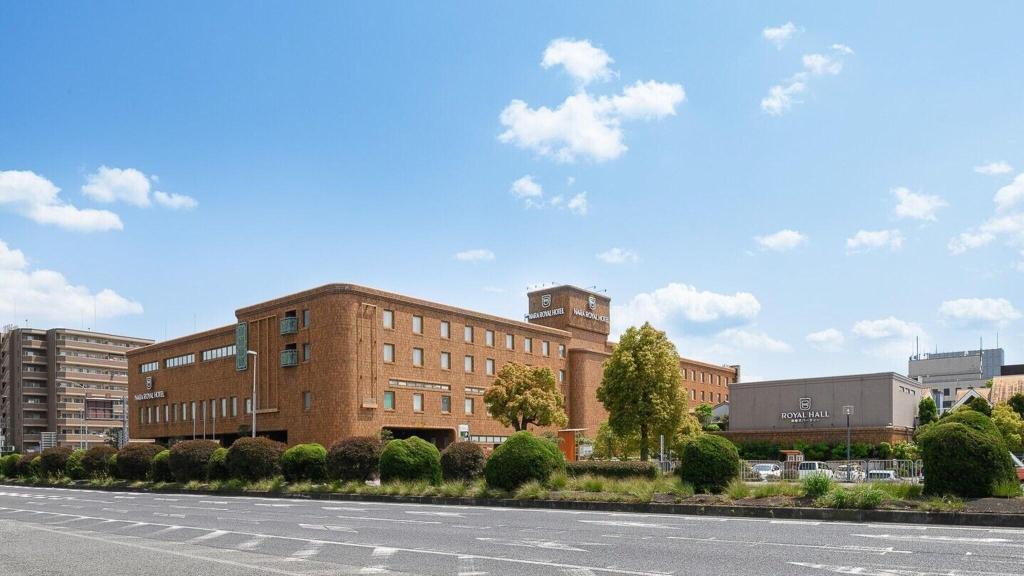
Nara Royal Hotel
Nara
Spa · Parking
From £44 a night, taxes incl.2 adults · checked 14 Nov, 22:38

★★★★
Hounkan
Nara
Parking
See prices and rooms →

★★★★
Itaniya
Nara
Pool · Parking
See prices and rooms →
Getting around
Central Nara is a walking city: from Kintetsu Nara station it is a short stroll to Kofuku-ji and the park, and the main sights can be linked on foot in a day. Loop buses cover the same ground if legs tire. Trains and buses run to Horyu-ji and Nishinokyo, and frequent trains connect Nara with Kyoto and Osaka.
When to go
Spring, for cherry blossom, and autumn, for red maples, are the prettiest and busiest seasons. Summer is hot and humid, with a rainy spell in early summer. Winter is cold, clear and quiet, and brings the fire festivals of January and March.
Questions about visiting Nara
- What is Nara best known for?
- The Great Buddha at Todai-ji, the free-roaming deer of Nara Park, the lantern-lined Kasuga Taisha shrine and its history as Japan's first permanent capital.
- How many days do you need in Nara?
- One full day covers the park and its temples. Two days lets you add Naramachi at a gentle pace and a trip out to Horyu-ji or the temples of Nishinokyo.
- Is Nara worth visiting, or staying overnight?
- Yes on both counts. Most people visit as a day trip from Kyoto or Osaka, but staying the night means you see the temples early and late, when the crowds have gone.
- What is there to do in Nara with kids?
- Feeding the deer in Nara Park, squeezing through the pillar at Todai-ji, watching mochi being pounded and climbing Mount Wakakusa are all hits with children.
More guides
- Where to stay in Nara
- The best things to do in London
- The best things to do in Edinburgh
- The best things to do in Manchester
- The best things to do in York
- The best things to do in Amsterdam
- The best things to do in Birmingham
- The best things to do in Liverpool
- The best things to do in Bristol
- The best things to do in Barcelona
- The best things to do in Budapest
- The best things to do in Cambridge
- The best things to do in Dublin
- The best things to do in Krakow