
No city on earth has a setting like Rio's. Granite peaks burst straight out of the sea, rainforest tumbles down the slopes between the tower blocks, and long curves of white sand fill every gap. The locals, the Cariocas, call it the Marvellous City without a trace of irony, and after one sunset from Sugarloaf you will see their point.
Rio is as much a way of living as a list of sights. The beach is the town square, football is a faith and samba spills out of bars on an ordinary Monday. So do the big things, the statue, the cable car, the famous sands, and then leave room to do very little, slowly, with a cold drink and your feet in the sand.
Don't miss
The big sights
Christ the Redeemer
Landmark

Photo: Donatas Dabravolskas, CC BY-SA 4.0 Arms outstretched on the summit of Corcovado, some 700 metres above the city, the Art Deco statue of Christ has watched over Rio since 1931 and is the image of Brazil the whole world knows. Up close it is bigger and more graceful than photographs suggest.
The view is the other half of the experience: the bay, the lagoon, Sugarloaf and the beaches all laid out at your feet. A little red cog railway climbs to the top through the forest, which is much the nicest way to arrive.
Tip: Cloud often wraps the summit. Check the sky before you go, and head up early in the morning for the clearest air and thinnest crowds.
Sugarloaf Mountain
Landmark

Photo: Wilfredor, CC0 A smooth granite dome standing guard at the mouth of Guanabara Bay, reached by a cable car in two stages: first to the lower Morro da Urca, then swinging across the gap to the summit. The glass cabins give you the view all the way.
From the top the city wraps around you, with Copacabana on one side, the bay and its bridge on the other, and Christ on his peak behind. It is the best place in Rio to watch the day end.
Tip: Go up an hour or so before sunset and stay as the city lights come on.
Selarón Steps
Landmark

Photo: Donatas Dabravolskas, CC BY-SA 4.0 A long public staircase climbing from Lapa towards Santa Teresa, covered from top to bottom in thousands of brightly coloured tiles. The Chilean-born artist Jorge Selarón began decorating the steps outside his house in the 1990s and never stopped, adding tiles sent to him from countries all over the world.
It is joyful, slightly chaotic and endlessly photographed. Look closely and you'll find tiles from home.
Tip: It is busiest in the middle of the day. Come early if you want a photo without a crowd.
Maracanã Stadium
Landmark

Photo: Валерий Дед, CC BY 3.0 Brazilian football's cathedral has staged two World Cup finals and the opening of an Olympic Games. Tours take you through the changing rooms and out to the edge of the pitch, but the stadium only truly makes sense on a match day.
When the big Rio clubs play each other the stands become a wall of flags, drums and song. If you can get to a game, go.
Beaches
In Rio the beach is where life happens. Hire a chair and settle in.
Copacabana Beach
Beach

Photo: Wilfredor, CC0 Four kilometres of sand in a perfect crescent, edged by a promenade paved in black-and-white waves that has become a symbol of the city. Copacabana is democratic and never still: footvolley games, vendors with trays of grilled cheese and cold coconuts, old men playing cards at the kiosks.
A fort stands at each end, and the one at the southern tip has a café with a lovely view back along the bay. On New Year's Eve millions gather here, dressed in white, for the fireworks.
Ipanema Beach
Beach

Photo: Mteixeira62, CC BY-SA 3.0 Around the headland, Ipanema is Copacabana's younger, better-dressed sibling, the beach that inspired the song. The sand is divided by numbered lifeguard posts, each with its own tribe, and the twin peaks of the Dois Irmãos rise at the far end like a stage set.
The streets behind are full of good restaurants, juice bars and boutiques. On Sundays the seafront road closes to cars, and a long-running craft fair fills the main square.
Tip: Take only what you need to the beach and leave valuables at the hotel. Chairs and umbrellas can be hired on the sand.
Arpoador
Beach

Photo: Pribruder, CC0 The rocky point between Copacabana and Ipanema is Rio's favourite place to watch the sun go down. People clamber over the smooth boulders to find a perch, surfers work the break below, and as the sun drops behind the Dois Irmãos the whole crowd bursts into applause.
It takes half an hour and may be the thing you remember longest.
Green Rio
Tijuca National Park
Nature

Photo: Pierre André, CC BY-SA 4.0 One of the largest urban forests in the world covers the mountains in the middle of the city. Remarkably, much of it was replanted by hand in the nineteenth century, after coffee plantations had stripped the slopes bare. Today it is thick Atlantic rainforest, alive with monkeys, toucans and butterflies.
Roads and trails lead to waterfalls, picnic spots and a string of lookouts, among them the pagoda-style Vista Chinesa. A guided hike or jeep tour is the easiest way to see it.
Jardim Botânico
Nature
The botanical garden was founded in 1808 by the Portuguese prince regent, and its most famous feature dates from those days: a long, arrow-straight avenue of towering imperial palms. Beyond it are orchid houses, giant water lilies, a Japanese garden and shady paths where you may well meet a marmoset.
It is calm, cool and beautifully kept, the perfect antidote to a morning on a crowded beach.
Lagoa Rodrigo de Freitas
Nature
A broad saltwater lagoon sits just behind Ipanema and Leblon, ringed by a flat path that Cariocas use for running, cycling and pushing prams. Mountains are reflected in the water, Christ looks down from above, and kiosks around the shore serve drinks and snacks into the evening.
Hire a bike and do the full circuit, or take out a pedal boat.
Neighbourhoods and culture
Santa Teresa
Neighbourhood

Photo: LBM1948, CC BY-SA 4.0 A hilltop district of winding cobbled streets and faded nineteenth-century mansions, long favoured by artists and musicians. A rattling yellow tram, the bonde, crosses the old white aqueduct from the city centre and climbs into the neighbourhood, which is reason enough to come.
Once up, wander between studios, craft shops and bars with terraces overlooking the bay. The Parque das Ruínas, the shell of a grand house turned cultural centre, has one of the best views in Rio.
Lapa
Nightlife
Under the tall white arches of an eighteenth-century aqueduct lies the home of Rio's nightlife. Old townhouses have been turned into samba clubs and dance halls on several floors, and at weekends the streets themselves become one enormous party, with caipirinha stalls and bands on the corners.
It is loud, sweaty and tremendous fun. Dancing skill is welcome but not required.
Tip: Take a taxi or app car door to door at night and carry only the cash you need.
Museum of Tomorrow
Museum

Photo: Bruno Tamm Rabello, CC BY-SA 4.0 On a pier in the revived port district, Santiago Calatrava's gleaming white science museum looks like something between a spaceship and a fish skeleton. Inside, big interactive displays ask where the planet and its people are heading over the coming decades.
Outside, the waterfront boulevard leads past enormous street murals and restored warehouses, a pleasant walk through a part of Rio most beachgoers never see.
Eat and drink
Churrasco and feijoada
Food
Two meals define Brazilian eating. At a churrascaria, waiters circulate with skewers of grilled meat and carve it at your table until you beg them to stop; the cut to wait for is picanha, the rump cap. Feijoada, a rich stew of black beans and pork served with rice, greens and orange slices, is the traditional Saturday lunch.
Neither is light. Plan nothing afterwards.
Caipirinhas and botecos
Food
Brazil's national cocktail is simple and dangerous: cachaça, a sugar-cane spirit, muddled with lime, sugar and ice. The place to drink one, or an ice-cold draught beer, is a boteco, the no-frills neighbourhood bar where Cariocas stand at the counter eating salt-cod fritters and putting the world to rights.
By day, switch to a bowl of frozen açaí from a juice bar.
Day trips
Petrópolis
Day trip

Photo: Ribeiro.dc, CC BY-SA 4.0 When the heat on the coast grew unbearable, Brazil's emperors retreated to this town in the forested mountains north of Rio. Their summer palace is now the Imperial Museum, with the crown jewels on display, and the streets around it are lined with canals, mansions and a Gothic cathedral.
The air is noticeably cooler, and the road up through the mountains is a fine drive.
Ilha Grande
Day trip

Photo: Viviane Marques dos Reis, CC BY-SA 3.0 Along the coast to the west, a big, mountainous island is covered in protected rainforest and has no cars at all. Boats and jungle trails are the only way to reach its beaches, the most celebrated of which, Lopes Mendes, is a long arc of white sand and clear surf.
Day tours run from Rio, but the journey is long. Stay a night or two if you can.
Where to stay in Rio de Janeiro
Not sure which area suits you? Read our guide: Where to stay in Rio de Janeiro →

★★★★
Novotel Rio de Janeiro Leme
Copacabana – Leme
Beach 20 m · Pool
See prices and rooms →

★★★★
Americas Barra Hotel
Rio de Janeiro
Pool · Parking
See prices and rooms →

★★★★★
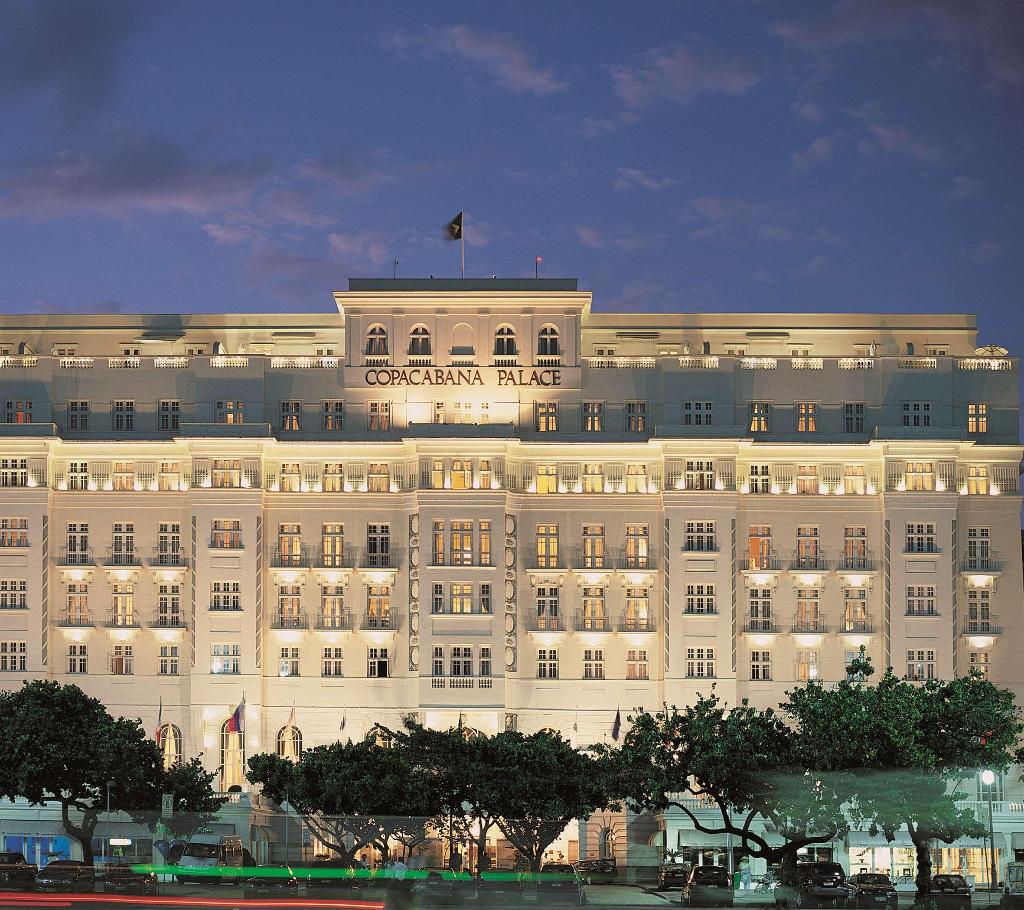
Copacabana Palace, A Belmond Hotel, Rio de Janeiro
Copacabana
Beach 100 m · Spa · Pool
See prices and rooms →

★★★★
Americas Benidorm Palace Hotel
Rio de Janeiro
Beach 200 m · Pool · Parking
See prices and rooms →

★★★★
Americas Copacabana hotel
Rio de Janeiro
Beach 700 m · Pool · Parking
See prices and rooms →

★★★★★
Fasano Rio De Janeiro
Rio de Janeiro
Spa · Pool · Parking
See prices and rooms →

★★★★
Americas Granada Hotel
Rio de Janeiro
Pool
See prices and rooms →

★★★★★
JANEIRO Hotel
Rio de Janeiro
Pool · 51 rooms · Parking
See prices and rooms →
Getting around
The metro is clean, simple and links the centre with Copacabana, Ipanema and Leblon, continuing towards Barra da Tijuca. Taxis and ride-hailing apps are plentiful and the best choice after dark. Use common sense as you would in any big city: keep phones and jewellery out of sight.
When to go
Rio is warm all year. Summer, from December to March, is hot, humid and stormy, and includes Carnival, held just before Lent, when prices and crowds peak. The winter months are drier and milder and still warm enough for the beach.
Questions about visiting Rio de Janeiro
- What is Rio de Janeiro best known for?
- The statue of Christ the Redeemer, Sugarloaf Mountain, the beaches of Copacabana and Ipanema, Carnival and samba, and football at the Maracanã.
- Is Rio de Janeiro worth visiting?
- Yes. Its combination of mountains, rainforest and beaches inside a major city is unique, and the music, food and outdoor life are a pleasure. Take sensible precautions with valuables and use taxis at night.
- How many days do you need in Rio de Janeiro?
- Four or five days covers Christ the Redeemer, Sugarloaf, the beaches, Santa Teresa and the forest without rushing. Add a day or two for Petrópolis or Ilha Grande.
- What is there to do in Rio de Janeiro with kids?
- The cog train to Christ the Redeemer, the Sugarloaf cable car, the Museum of Tomorrow, the botanical garden and cycling or pedal boats on the lagoon are all family-friendly. The beach at Leblon has a well-known corner set up for families with babies and toddlers.
- Do you need a car in Rio de Janeiro?
- No. The metro and taxis cover everything in the city, and tours or transfers are the easiest way to reach Petrópolis and Ilha Grande.
More guides
- Where to stay in Rio de Janeiro
- The best things to do in London
- The best things to do in Edinburgh
- The best things to do in Manchester
- The best things to do in York
- The best things to do in Amsterdam
- The best things to do in Birmingham
- The best things to do in Liverpool
- The best things to do in Bristol
- The best things to do in Barcelona
- The best things to do in Budapest
- The best things to do in Cambridge
- The best things to do in Dublin
- The best things to do in Krakow