
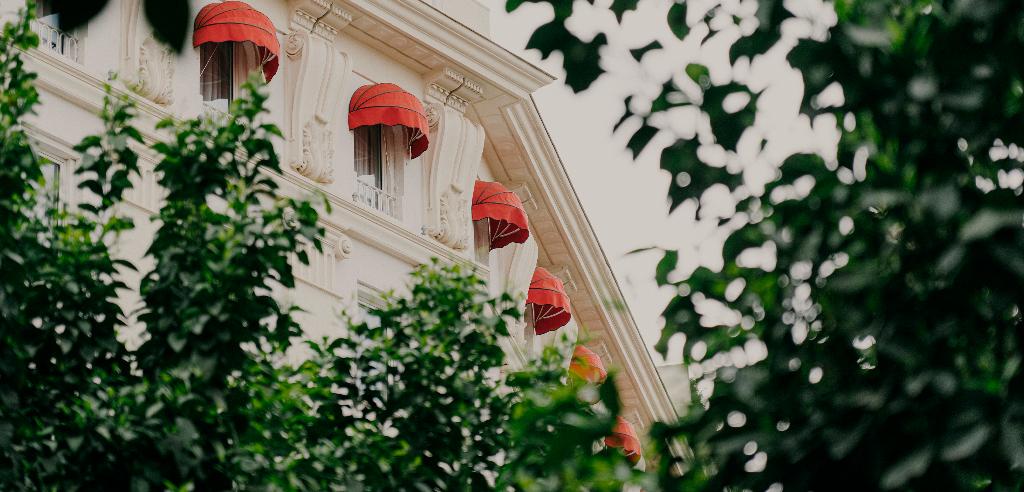
Seville is Spain turned up to full volume. Orange trees line the streets, horse-drawn carriages clip past a cathedral so big it took more than a century to build, and the Moorish-style halls of the Alcázar are as intricate as lace. In the evenings the whole city seems to be out, propping up tapas bars, strolling by the river or crammed into a back room to watch flamenco.
The best of it is in a compact, walkable old centre, with Triana just across the Guadalquivir. Give it at least three days, more if you want to add Córdoba, Jerez or Cádiz, and avoid the furnace heat of high summer if you can.
Don't miss
The big sights
Three of them share a UNESCO World Heritage listing, and all are within a short walk of each other.
Real Alcázar
Landmark

Photo: Benjamin Smith, CC BY-SA 4.0 Seville's royal palace is a dream of tiled courtyards, horseshoe arches, carved plaster and cool, trickling fountains. Much of what you see was built for the Christian king Pedro I in the 14th century by Muslim craftsmen, in the Mudéjar style that blends both worlds. The upper floors are still used by the Spanish royal family when they visit.
Leave time for the gardens: a rambling maze of palms, pavilions, pools and orange trees. Game of Thrones fans may recognise them as the Water Gardens of Dorne.
Tip: Book a timed ticket online well ahead, especially in spring, and go early before the courtyards fill up.
Seville Cathedral and the Giralda
Landmark

Photo: Diliff, CC BY-SA 3.0 One of the largest Gothic cathedrals in the world, built on the site of the city's great mosque. Inside, the scale is overwhelming: a soaring nave, a gilded altarpiece of staggering size and the grand tomb said to hold the remains of Christopher Columbus.
Then climb the Giralda, the cathedral's bell tower and once the mosque's minaret. Instead of stairs, a series of ramps winds up to the top, wide enough for a horseman to ride, with views over the rooftops at the end.
Tip: Book online to skip the ticket queue. Shoulders and knees should be covered inside.
Plaza de España
Landmark

Photo: Carlos Delgado, CC BY-SA 4.0 Built for the 1929 Ibero-American Exposition, this vast semicircle of brick towers, arcades and bridges wraps around a canal where you can hire rowing boats. Along the walls, tiled alcoves celebrate each of Spain's provinces, and Star Wars fans will know it from Attack of the Clones.
Tip: Go late in the afternoon, when the light turns the brick gold, and walk on into the Parque de María Luisa next door.
Metropol Parasol
Landmark

Photo: Gzzz, CC BY-SA 4.0 Locals call it Las Setas, the mushrooms: a gigantic undulating canopy of honeycombed timber floating over the Plaza de la Encarnación. A walkway snakes across the top with views over the old town, and Roman ruins found during its construction are on show underneath.
Tip: Sunset is the time to go up, when the city glows and the lights come on.
Neighbourhoods to wander
Barrio Santa Cruz
Neighbourhood

Photo: CarlosVdeHabsburgo, CC BY-SA 4.0 The old Jewish quarter, right beside the Alcázar, is a tangle of whitewashed lanes barely wider than your outstretched arms, opening on to little squares shaded by orange trees. Peer through wrought-iron gates into tiled patios, and get lost on purpose.
Tip: Come back in the evening, when the day-trippers have gone and the plazas belong to diners.
Triana
Neighbourhood

Photo: Gzzz, CC BY-SA 3.0 Cross the Puente de Isabel II and you're in Triana, the proud riverside barrio long known for its potters, sailors and flamenco singers. Browse the ceramics workshops, look for the tiled shopfronts, then take a drink at a bar along Calle Betis for the classic view back across the river to the Torre del Oro and the Giralda.
Alameda de Hércules
Neighbourhood
A long, tree-lined square north of the centre, guarded by Roman columns topped with Hercules and Julius Caesar. It is where Seville's younger, more alternative crowd comes to drink, with bars and terraces down both sides that stay busy late into the night.
Palaces, parks and art
Parque de María Luisa
Nature
Seville's loveliest park is a shady sprawl of palms, fountains, ponds and tiled benches, laid out around the pavilions of the 1929 exposition. On a hot afternoon it is the best place in the city to be.
Casa de Pilatos
Landmark

Photo: Benjamin Smith, CC BY-SA 4.0 A 16th-century noble palace that is like a smaller, quieter Alcázar: a courtyard of Mudéjar arches and classical statues, walls covered in glorious tiles, and gardens full of bougainvillea. It still belongs to the Dukes of Medinaceli.
Museo de Bellas Artes
Museum
Housed in a former convent with flower-filled cloisters, Seville's fine arts museum is the place to see the masters of the Seville school, above all Murillo and Zurbarán, in the city where they worked.
Eat, drink and flamenco
Tapas
Food
Seville is one of Spain's great tapas cities, and the custom is to stand at the bar and move on after a plate or two. Look out for espinacas con garbanzos (spinach and chickpeas with cumin), pork cheeks, fried fish and montaditos (little filled rolls), with a glass of cold beer or a chilled fino sherry.
Tip: Lunch runs late and dinner later still: few locals sit down before nine in the evening.
Mercado de Triana
Market

Photo: CarlosVdeHabsburgo, CC BY-SA 4.0 Triana's food market sits on the site of the medieval castle that housed the Inquisition, whose ruins you can visit underneath. Above ground it is a lively jumble of fishmongers, ham stalls and little bars serving tapas straight from the counters.
Flamenco
Nightlife

Photo: Diego Delso, CC BY-SA 4.0 Andalucía is the home of flamenco, and Seville is one of its capitals. You can see it on a big stage, in an intimate tablao or in a small museum performance, but the real thing is raw and spine-tingling wherever you find it: a singer's anguished wail, a guitar and the thunder of a dancer's heels.
Tip: Smaller venues sell out, so book a day or two ahead. Triana and the streets around the Alameda are good for informal bars where it happens spontaneously.
Day trips
Córdoba
Day trip

Photo: Jose María Ligero Loarte, CC BY-SA 4.0 The high-speed train gets you to Córdoba in well under an hour, and its Mezquita is reason enough to go: a vast former mosque, a forest of red-and-white striped arches, with a cathedral planted in the middle. Around it, the flower-filled lanes of the old Jewish quarter are a delight.
Jerez de la Frontera
Day trip
Sherry country. The town is full of bodegas, some grand and famous, others small and family run, where you can tour cool, dark cellars stacked with barrels and taste the full range from bone-dry fino to treacly Pedro Ximénez.
Cádiz
Day trip

Photo: Benjamin Smith, CC BY-SA 4.0 Often called the oldest city in Western Europe, Cádiz sits on a sliver of land almost surrounded by the Atlantic. Its golden-domed cathedral, faded seafront and lively little beach at La Caleta make a refreshing, salty contrast to inland Seville.
Where to stay in Seville
Not sure which area suits you? Read our guide: Where to stay in Seville →
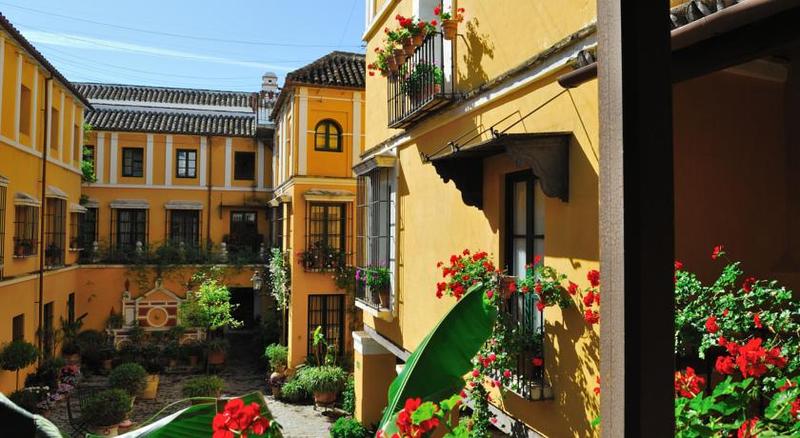
★★★★
Casas de la Juderia
Sevilla
Spa · Pool · Parking
See prices and rooms →
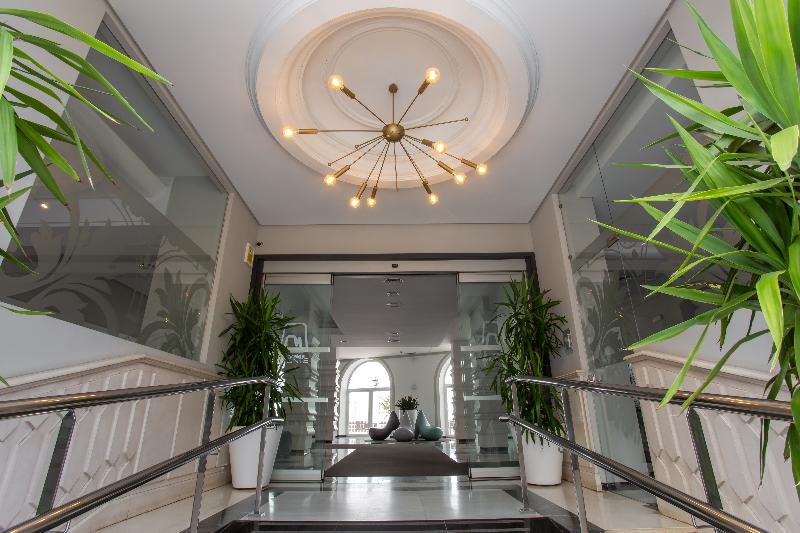
★★★★
Monte Triana
Sevilla
Adults only · Pool · Parking
See prices and rooms →

★★★★★
Hotel Colón Gran Meliá
Sevilla
Spa · Rooftop pool · Parking
From £577 a night, taxes incl.2 adults · checked 1 Oct, 18:07
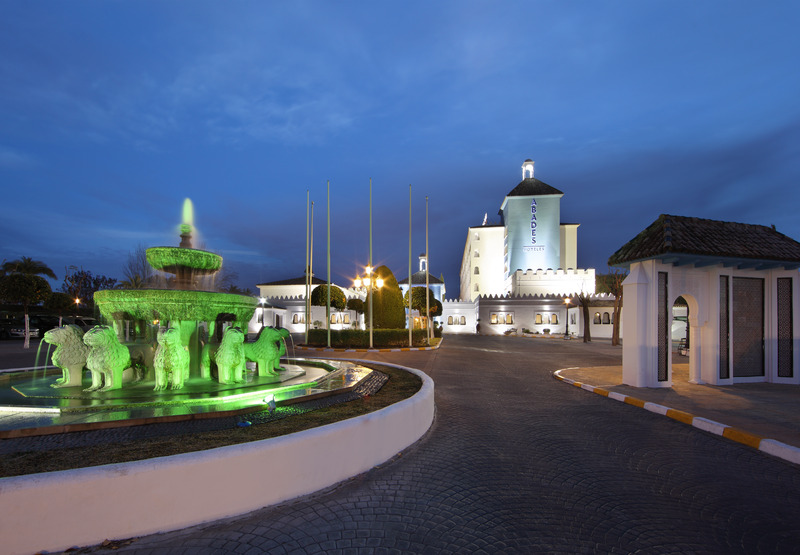
★★★★
Abades Benacazon
Benacazon
Pool · Parking
See prices and rooms →
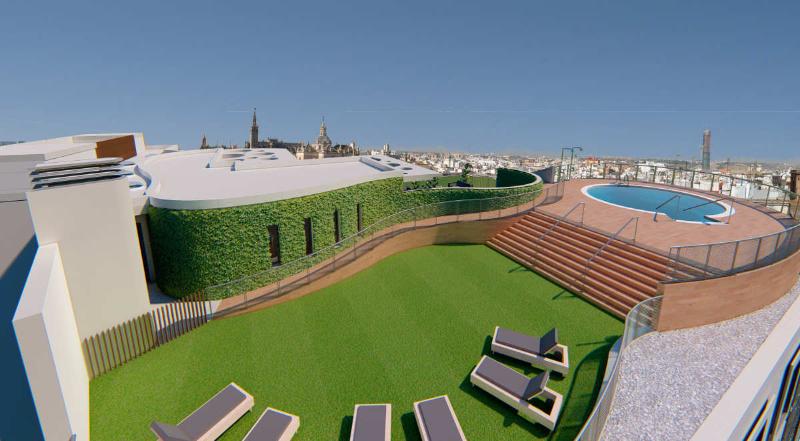
★★★★
Abba Sevilla
Sevilla
Rooftop pool · Pets allowed
See prices and rooms →

★★★★★
Unuk Hotel
Seville
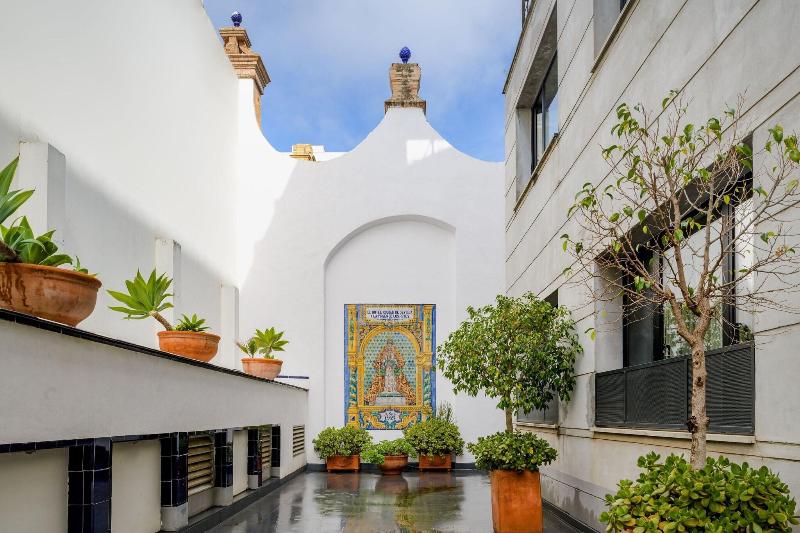
34 rooms · Parking
See prices and rooms →
★★★★
AC Ciudad de Sevilla
Sevilla
Pool · Golf · Parking
See prices and rooms →

★★★★★
Hotel Casa Palacio Don Ramón 5* GL by Kaizen Hot.
Seville
26 rooms · Parking
See prices and rooms →
Getting around
Seville's old centre is flat and best explored on foot, with a tram and buses for longer hops and plenty of bike lanes. Trains to Córdoba and Jerez leave from Santa Justa station; Cádiz is reachable by train or bus.
When to go
Spring is glorious, with orange blossom, Holy Week processions and the April Fair, though hotels book up and prices rise. Autumn is lovely too. July and August are fiercely hot, so plan sightseeing for the morning and evening.
Questions about visiting Seville
- What is Seville best known for?
- The Real Alcázar, its vast Gothic cathedral and the Giralda tower, Plaza de España, flamenco, tapas, and its spectacular spring festivals, Holy Week and the April Fair.
- How many days do you need in Seville?
- Two or three days covers the main sights and a couple of good evenings. Add a day for a trip to Córdoba or Cádiz.
- Is Seville worth visiting in summer?
- It is very hot in July and August. If you go then, see the sights early, rest in the afternoon, and do as the locals do and stay out late when it cools down.
- Where can you see flamenco in Seville?
- There are shows across the old town, from tablaos in Santa Cruz to bars in Triana, and a flamenco dance museum with regular performances. Book smaller venues ahead.
More guides
- Where to stay in Seville
- The best things to do in London
- The best things to do in Edinburgh
- The best things to do in Amsterdam
- The best things to do in Barcelona
- The best things to do in Budapest
- The best things to do in Dublin
- The best things to do in Krakow
- The best things to do in Prague
- The best things to do in Berlin
- The best things to do in Lisbon
- The best things to do in Milan
- The best things to do in Paris
- The best things to do in Rome